I keep thinking about the Sirens from Homer’s The Odyssey. Hollywood and fantasy books paint the Sirens as beautiful monsters who lure men to their deaths with pretty faces and melodious songs. But in the original Greek, the Sirens are grotesque bird-women with human heads. And rather than singing like Ariel from The Little Mermaid, the Sirens sang about knowledge.
They said, “Come closer, famous Odysseus … No one sails past this place in his black ship until he has listened to the honey-sweet voice from our mouths. Then he goes on his way delighted, knowing more than he did before. For we know all the suffering that the Argives and Trojans endured in the broad realm of Troy by the will of the gods, and we know everything that happens upon the fertile earth.”
For the sailors who sit on the shore listening to the endless stream of knowledge, they forget about their families, abandon their duties, and absorb as much information as possible until they starve to death among the rotting bones of previous victims. The myth isn’t saying knowledge is evil – Odysseus listens, after all – it’s warning about the desire to seek absolute god-like knowledge. It’s warning there’s an all-consuming nature to information, and it’s important to temper that desire with restraint.
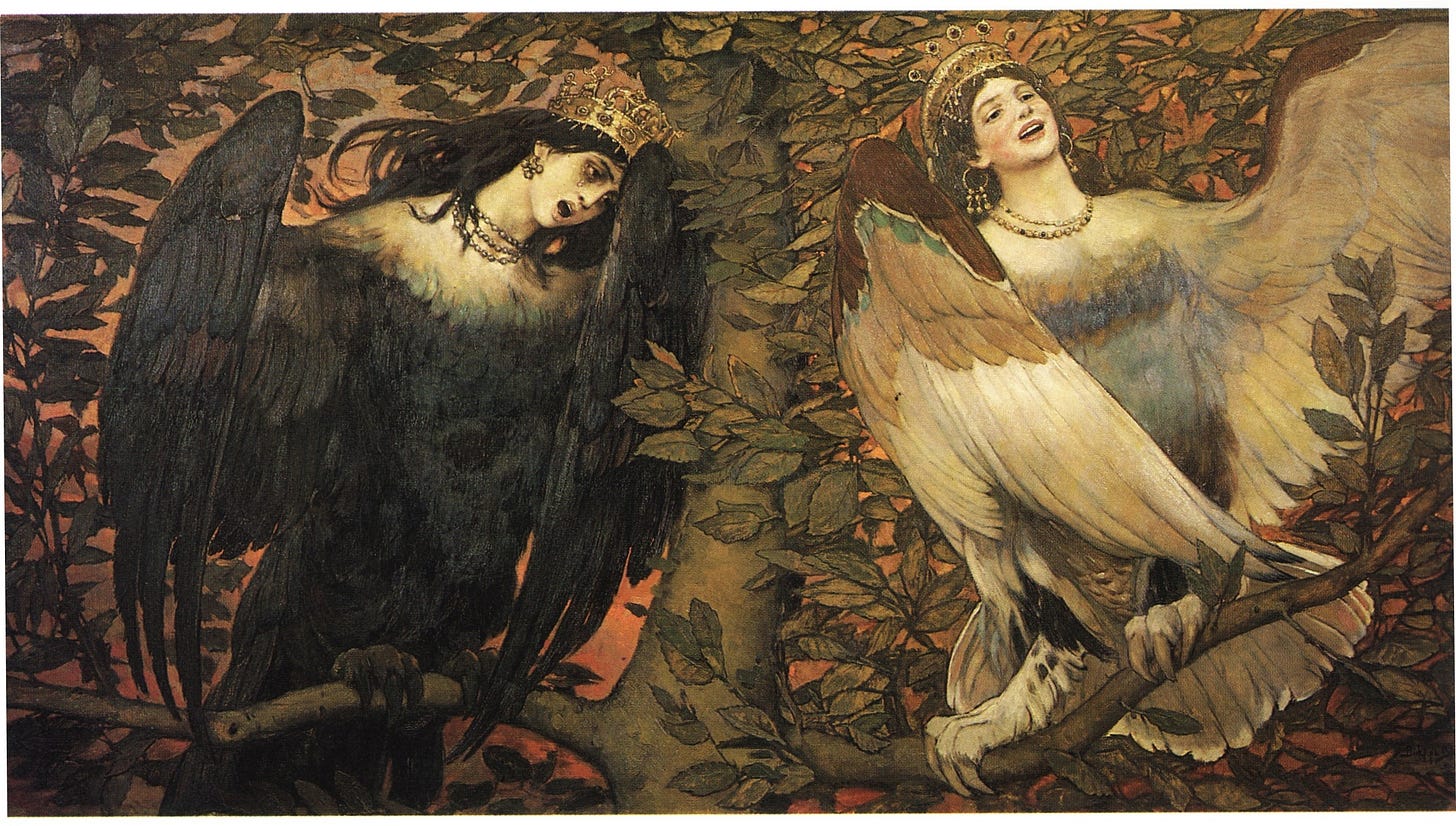
What the sirens used to look like. Painting by Viktor Vasnetsov. “Sirin and Alkonost,” 1896
At first, the myth may seem antiquated, but when you dig a little deeper, it has relevance to today. The 24-hour news cycle, anyone? How about endlessly scrolling on social media? The news promises to keep you informed, aware, educated. Social media creates a feeling that there’s always something “happening” online that you can plug into any minute. Always another laugh to be had, a recipe to try, a lifehack to learn, while also doing the same thing the news does because how many people learn news through social media? (The answer: a lot.)
Both the news and social media target our deep-seated anxieties, ego, and desire to know what will happen next. I’d say AI is similar because it seems to promise, “I know everything that happens upon the fertile earth,” just like the Sirens.
What we all know, what is repeatedly drummed into us, is that if we stay glued to our screens and feeds, it’s paralyzing. It creates anxiety, draws focus, and pulls us from the life in front of us. I, personally, don’t have a problem with doomscrolling. I’m able to metaphorically stuff wax in my ears by not checking social media all day long. The temptation that is more alluring for me is the promise that someone can tell me the future.
I know I’m not alone in this. I just watched a TV show where one of the characters went to a tarot card reader and asked her to keep pulling cards until she received the answer she wanted about her future. I laughed because while I haven’t done that myself, I recognized the desire. I want to know the future so badly. A part of me thinks if I just know what will happen, then I can feel safe, happy, and secure in the present.
The last year and a half has been a painful reminder that I don’t know the future, I can’t predict the future, and no one else can either. And the tools I thought did those things? The tarot cards and pendulums and I Ching? They are meant to induce self-knowledge, not knowledge of the future. When my pendulum says, “Yes,” in answer to the question, “Will I win that contest?” it’s revealing how much I want to win that contest, not that I actually will. (I mean, maybe I will, but the pendulum can’t know that.)
What I’m learning is something civilization has been grappling with for centuries – the desire to know everything, including the future, only drives people mad. And the solution is something we’ve been hearing for centuries, too: be present with the life you have.
I dream of a world where we understand the desire to know everything exists in various forms. A world where we recognize that intellectual temptation is a trap and can paralyze us. A world where we realize the ancient myths still have relevance for us today.
Another world is not only possible, it’s probable.
My mind is swirling with options and choices and I can’t make a decision. Some people are served by just doing something, trying whatever, striking out. I am not one of them. With that in mind, I’m resharing this post from November 2021. Enjoy.
Sometimes I think the expression, “Don’t just do something, sit there,” was made for me. I’m not prone to inertia and people often describe me as “tenacious” and “hard-working.” If something doesn’t work, I’ll try something else. And then something else. And then something else. I’m not tapping into intuition – I’m throwing spaghetti at the wall and seeing what sticks. That works for some people. It does not work for me.
So much of the self-help and advice world is one-size-fits-all. The person or people giving the advice assume it will work for everyone. It does not. That’s why I appreciate systems that allow for more individualization like the five Buddha families, also called the five wisdom energies, which are Buddha, Vajra, Ratna, Padma, and Karma.

This would be a nice place to just sit. Photo by Boba Jovanovic on Unsplash
Each person has a predominant Buddha family with strengths and weaknesses. For instance, Vajra family people have an aptitude for mental clarity and the ability to correct any distortions. They are scientific, logical. But when they are encumbered, when their energy is bound up, they can become angry, judgmental, and critical.
All of the Buddha families speak to me, but the one I align with the most is the Karma family. Karma family people are hard-workers, they know how to get things done. When their energy is encumbered, they become envious, comparing themselves with others and finding themselves lacking. (I laughed upon hearing that because the description is so apt.) The meditation for a Karma family person is to be in the flow, to think about the wind picking up a sail so that it moves with ease, not force. In other words, the practice for people like me is to take inspired action, not compulsive action.
I’ll admit, that’s so freaking hard because my compulsive doer is strong, but taking inspired action seems to be the message I’m receiving over and over again. The universe seems to keep telling me, “Pause, my dear. Just pause.” This is also in alignment with my spiritual philosophy because my teacher says, “[M]ovement through speed and pause is an essential factor for each and every animate or inanimate object. Wherever there is existential factor there must be this pulsation. An entity acquires strength and stamina during the pause phase, and emanates vibration during the speed period. There cannot, however, be any absolute speed or absolute pause in the created world.”
In other words, I’m paused now but it won’t be permanent. I just have to wait for wind in my sails. How long I’ll have to wait, I don’t know. It could be a while, or it might be three minutes from now. The answer is unclear. But for now, it means instead of just doing something like I normally do, I’m sitting here.
I dream of a world where we recognize constantly doing all the time is a recipe for burnout. A world where we understand the importance of sitting still and waiting. A world where we understand there’s power in pausing. A world where instead of compulsively doing, we wait for inspired action.
Another world is not only possible, it’s probable.
I notice in myself and others the desire for certainty, resolution, simplicity. This means this, and that means that. We like binaries: heroes and villains. Black and white. I don’t know about you, but I’ve literally never encountered anything in real life without complication and nuance. If such a thing exists, can you let me know? I’d like to build a shrine to it. I digress. . .
Anyway, rather than simplicity and resolution, I experience a whole lot of paradox and doublethinking. Doublethinking is a term coined by George Orwell in his novel 1984 but it’s also a psychological mechanism. Specifically, it’s holding two completely contradictory beliefs in your mind at the same time and accepting both of them as true. For instance, “This person is my haven, the one I love and trust the most,” and also, “That same person is a threat, destroyed my trust, and hurt me deeply.” If you’re having trouble reconciling that, well, that’s kind of the point, but if it helps, think about how adultery applies here.
I think it’s fair to say U.S. culture is terrible at doublethink. When we’re faced with contradictory truths, instead of holding both, we push people to pick a side, flatten nuance, and reject the opposing truth completely. We talk about how “the other side” is the problem rather than attempting to resolve conflict internally. It’s really hard, generally, for us to say, “You’re both right.”
Hold it all and hold it all gently. Photo by Autumn Guinn on Unsplash
This isn’t serving us very well, as you can see. We’re dividing ourselves further and further, and I’m not sure anyone is really satisfied. Freedom doesn’t lie in convincing “the other side” that you’re right and they’re wrong. Real freedom lies in being able to say, “We’re both right, and we’re both wrong.” Can you imagine? What would it be like to admit that?
I can’t force anyone to admit that. I can’t control anyone’s mind, but I do have a choice in how I hold doublethink myself. I’m reminded of Rumi’s poem, The Guest House. I’m not going to quote the whole thing but the beginning says:
This being human is a guest house.
Every morning a new arrival.
A joy, a depression, a meanness,
some momentary awareness comes
As an unexpected visitor.
Welcome and entertain them all!
I do think there’s an aspect to his poem that’s accurate: every morning there’s a new arrival. But I don’t find being human to be a “guest house”; it’s more like a psychiatric hospital, where some people enroll voluntarily, and others are there against their will. Some emotions and experiences I say, “Yes! Come! Stay as long as you like!” whereas for others my response is, “How long are you sticking around? Is there some way I can speed up your departure?” Rumi says to welcome and entertain them all, and understand that even the most hostile guest serves a purpose, acts as a teacher, and clears away debris.
I used to believe that but I don’t really anymore. Some things are just plain horrible. Sometimes we’re just suffering. And rather than trying to push away the bad things, rather than trying to reconcile things that don’t feel reconcilable, I’m instead learning life is full of doublethinking. Some things don’t resolve. Some things are contradictory and don’t cancel each other out. I can drive myself crazy trying to pick one truth over another, or I can do the seemingly impossible and hold them all.
I dream of a world where we remember life is complicated and filled with nuance. A world where we recognize two contradictory things can be true at the same time. A world where instead of trying to create resolution and certainty in ourselves and in the world, we practice holding it all.
Another world is not only possible, it’s probable.
As a journalist, and maybe because of my psychological makeup, I care a lot about the truth. It irks me when people repeat false information, or they declare something as fact without citing any evidence. I also notice when an issue stirs passion in people, or presses their buttons, they’re more apt to gloss over the truth because it doesn’t fit with what they want to be true.
I’m not saying I’m immune to this, because I’m not. I repeatedly have to check myself, dig deeper, and try to find the original source. What troubles me is that, especially with the rise of AI and social media, we don’t know what’s true anymore. But more importantly, do we even care?
When people disagree with us, they are “sheeple” and “idiots” and “people who haven’t done their own research.” There are people who’ve been “red pilled” and are “still living in the matrix.” How did we get here?
The truth is boring and doesn’t encourage engagement, whether that’s clicks or likes or comments or reshares. Back when Twitter was still Twitter, a study from MIT found misinformation spreads about six times faster than the truth. TikTok is renowned for this. People post random things as “truth” all the time when they aren’t backed up. Like that rubbing cheap beer all over your skin before lying out in the sun acts as a natural tanning accelerator. It does not.
The truth still matters to me. . .Photo by Alex Shute on Unsplash
Big Tech has zero incentive to shut this down – although it half-heartedly tries – because misinformation and disinformation translate into eyeballs and engagement, which spells more money for them. Big Tech, and I’m including AI in this, directly affects our lives: how we think, how we vote, and also how we behave. That’s a lot of power in the hands of companies that are mostly unregulated, although becoming more so.
I also think something needs to be said about the mind itself. There’s a psychological concept called “the third-person effect,” and it’s the tendency for individuals to estimate stronger effects of mass communication messages on others as compared with themselves. In other words, it’s thinking other people fall for dupes and misinformation but not me!
No one is immune to the third-person effect. Many spiritual people think they know “the truth” because they meditate; they’re tapping into their intuition; they’re aligned with the source of all knowledge. According to my spiritual philosophy, there is such a thing as immutable truth, as absolute truth. That “thing,” or entity, really is Brahma, which is a combination of the consciousness that pervades the universe as well as the creative force undergirding it. Everything else is a relative truth.
What is often missing among spiritual people is the understanding that the mind has layers, or filters. I won’t go into it today, but even without launching into an in-depth explanation, this makes sense. We filter everything we hear, everything we learn through the lens of our perception. We compare it with what we’ve heard before, what we’ve been exposed to, what we’ve experienced in the past. All of which is to say we’re not imbibing a perfect, unadulterated truth. Nor is “intuition” the same as “omniscience,” despite the seductive belief that it can be.
The best I think any of us can do right now is practice some humility and recognize we may not actually know everything, that our sources are flawed, and we don’t know the absolute truth. The best any of us can do right now is cultivate healthy doubt and skepticism. I don’t know if everyone still cares about the truth, but I sure do, and that’s all I’m in control of anyway.
I dream of a world where we realize lies spread faster than the truth. A world where we recognize the truth is relative and can change depending on time and space. A world where we leave room for being wrong while also recognizing there is such a thing as consensus reality. A world where we still seek to know the truth.
Another world is not only possible, it’s probable.
I’ve seen a few posts on social media about planting trees because it helps future generations, and it got me thinking about how there are other examples of that too, particularly in social justice movements. What follows is a post from December 2017 about the #metoo movement. While the struggle continues, we aren’t in the pre-2017 world because the legal and structural architecture of the workplace has fundamentally changed. The movement successfully passed systemic protections that cannot be easily undone.
The other day, a friend of mine confessed she’s struggling to find the silver lining in the #metoo campaign. Yes, it’s about time certain men experience the consequences of their inappropriate sexual mistreatment. She applauded that, but what about the survivors themselves? For their hardship? Where is their silver lining when many are suffering from PTSD or other symptoms?
The question stuck with me because while it’s true sometimes suffering leads to transformation, sometimes suffering is just painful and unreasonable and scarring. Where is the good in all that? For me, the answer comes when I change my perspective, when I look beyond the individual and see society as a whole.
Specifically regarding #metoo, the silver lining is that things are changing for the people behind us. Future generations won’t have to deal with the same things we are. Man after man is losing his job due to sexual misconduct allegations. Things cannot and will not be the same after this. In that way, hardship has made things better for future generations.
I’ve written about this before, but in yogic philosophy we have a word for this: tapah. Tapah means undergoing hardship in order to help others. Normally, when I think of tapah, it’s on an individual and physical level, as in helping someone move into their new apartment. Or giving away food when I’m hungry because someone else is hungrier than I am. But there’s also tapah on a grander scale. Sometimes undergoing difficulties benefits not only the people we interact with directly, but those we don’t. And furthermore, sometimes undergoing difficulties benefits not only current generations, but future ones.
This makes sense when we take a historical perspective. I’m thinking about unions. How many children died before we enacted child labor laws? How many people had to suffer before we shortened the work week to five days? Some people lived to see those changes, but some did not. Individually, we might say nothing good came from the person’s struggles, especially if no direct link exists between their hardship and change, but collectively it adds up to something greater.
I’ve heard before that we stand on the shoulders of giants. Usually we say that in the context of innovation and discovery. But what if we stand on the shoulders of giants regarding darker things too? And what if we ourselves are giants for the people coming after us?
I dream of a world where we recognize our actions have consequences not only for us, but for those who come after us. A world where we remember we may not see the fruits of our actions, but that doesn’t mean our actions don’t bear fruit. A world where we take a broader perspective and realize sometimes we are the giants people will stand on the shoulders of.
Another world is not only possible, it’s probable.
I don’t work in AI, so I haven’t felt qualified to weigh in on Evan Hubinger’s post on X about the risks of AI. As a refresher, he’s a top safety researcher at Anthropic, and he said AI is advancing so quickly he believes there is a greater than 10% chance it “could kill all humans” within the next decade.
He said the risk from the models that currently exist is “low,” but he’s “worried” the technology might develop and improve itself soon to the point where it poses an existential risk to humanity. He didn’t say how, but since his post, tons of people have presented their own theories and also come out saying AI is dangerous.
Again, I don’t work in AI, but I have opinions too, and they’re based on research, observation, and lived experience. Rather than believing we’re all doomed, that the machines are going to kill us all, I see AI as just another form of technology in a long line of technology that humans can use for good or evil. We like to pretend that the threats to our existence are always outside of us – that some machine is going to become autonomous and ruin us all – but the reality is humans are the threat and the solution.
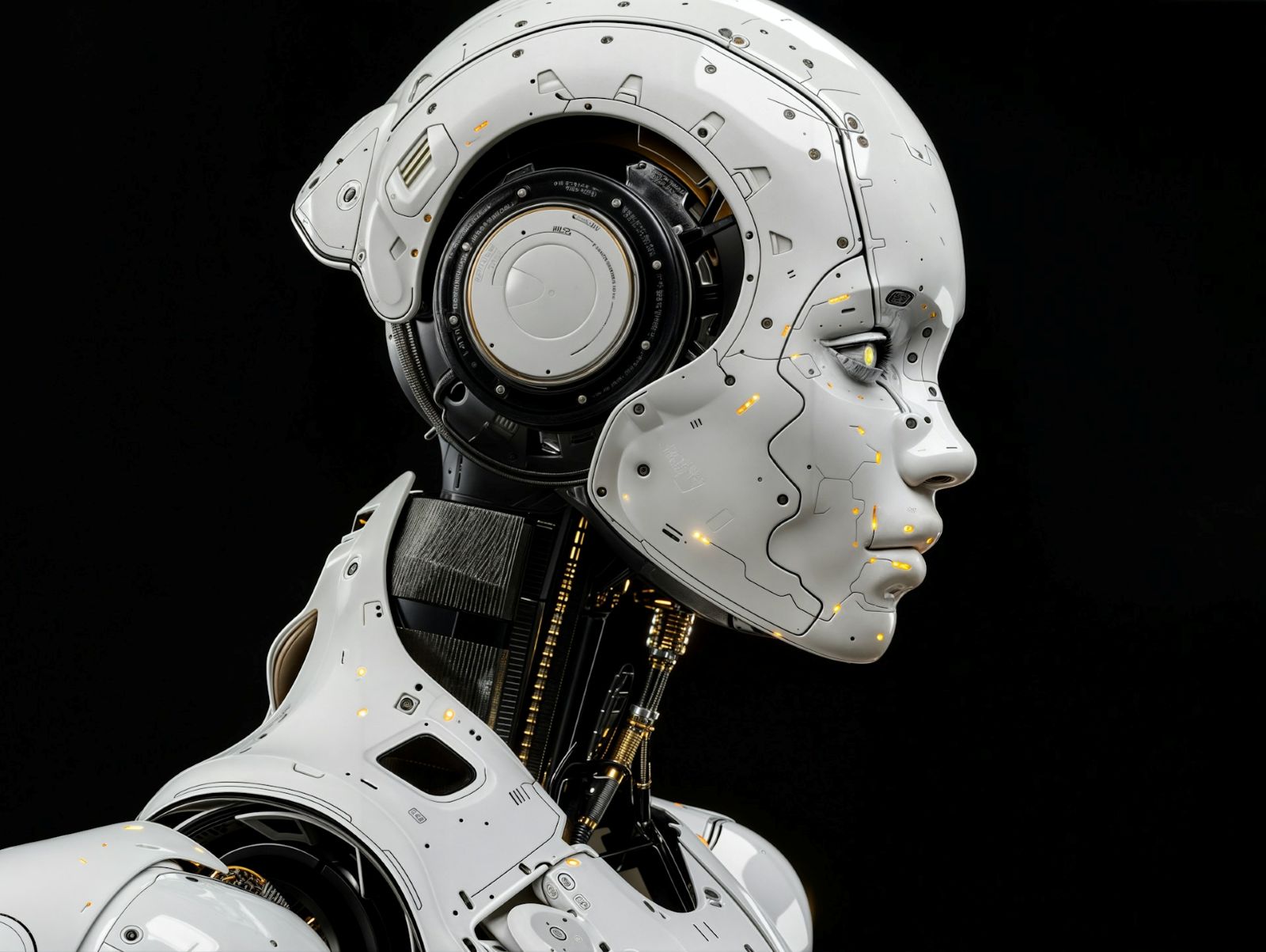
I’m not so worried about these. Photo by Gabriele Malaspina on Unsplash
Yes, yes, I know in some instances AI is acting autonomously, and yes, I know that can be dangerous. But you know what’s more dangerous? The humans using AI for nefarious purposes. And guess what? Humans have been using various forms of technology for nefarious purposes for a long, long time, and we’re still here! Why? Because there are more good humans than bad ones.
Repeatedly, we’ve seen humans implementing laws, creating regulations, building new systems, constructing guardrails, and doing all the things that need to be done to enhance safety. Not without challenges, not without protest, but doing something nonetheless. This is always how progress is made. We have tamper-evident seals on pill bottles because in 1982, seven people died after taking extra-strength Tylenol capsules laced with potassium cyanide. We have better working conditions because people banded together, protested, and created labor unions and labor laws.
Humanity is not doomed, but I understand why it’s easy to fall under that spell. Fear is a powerful emotion, and fear is tied to survival. However, as my friend Emma says, “There will always be an invitation to the fear party, but you can decline.” I choose to decline the invitation because I see more things to be hopeful about than to be scared of.
I see people showing up for each other in small and large ways. Someone dropping off a COVID test because their friend can’t leave the house. A neighbor offering to watch someone’s children while the parents are unavailable. Doctors and nurses purposely putting themselves in harm’s way because they’re saving lives. Three people wading into the flooded basement beneath the damaged Chernobyl reactor to drain a pool of cooling water and prevent a catastrophic second steam explosion. And doing so with the knowledge that the contaminated water would likely kill them, but choosing to do it anyway because they wanted to save lives.
My spiritual teacher says, “There are some people who are pessimistic. They say that the society around us is very bleak … Pessimists say this because they have never made any detailed study of human history, nor do they care to. Had they done so, they would certainly be optimistic.”
Am I optimistic? I’m not sure. But what I am sure of is that humanity is not doomed.
I dream of a world where we remember humanity has always faced challenges and overcome them. A world where we recognize the threat to humanity is not machines, but other humans. A world where we remember that while there are some not-great humans in existence, they are fewer in number than the kind and caring ones. A world where we realize humanity is not doomed.
Another world is not only possible, it’s probable.
I’m not a true crime or horror kind of gal. I don’t enjoy blood or guts or gore. I don’t derive pleasure from other people’s suffering so it was curious to me why a new friend sent me a podcast about the wreck of the Grafton. The Grafton was a ship that crashed onto one of the islands near New Zealand in 1864 resulting in four men becoming stranded.
The podcast revealed all the details, all the trials and tribulations these men went through. I was riveted and disgusted in equal measure. I won’t share everything because I highly recommend you listen to the podcast for reasons I’ll reveal shortly, but suffice to say, they went through a nightmare. They had flies biting their skin and then laying eggs. They were sunburned and starving and dehydrated and sick. What they went through was horrific.
I listened to the podcast all the way through and in the last 10 minutes, I burst into tears and not because one of the men died. I won’t give away the ending because I truly think everyone should listen to the podcast, but the half-spoiler is what these men chose to do with their suffering. I’ve heard numerous tales of woe over the years and people have different responses to what happens.
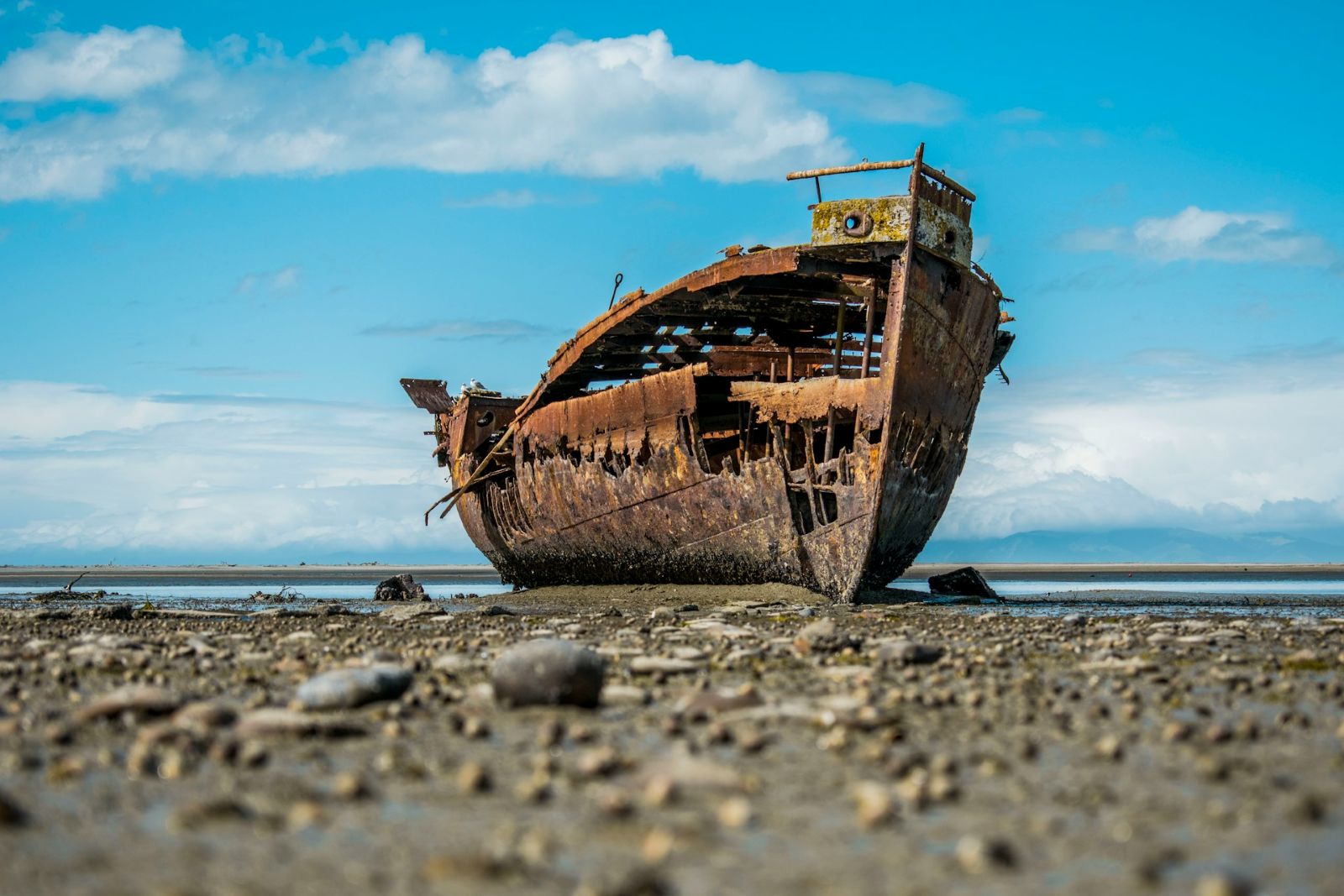
A shipwrecked boat! In New Zealand! Photo by Aneta Hartmannová on Unsplash
Some people use suffering to turn them bitter, angry, resentful. Life stops being joyful because it doesn’t make up for all the trouble they’ve endured. They compare themselves to other people and always fall short. Then there are people who become selfish jerks who only care about what happens to them. They think no one else is looking out for them so they have to look out for themselves. They use their suffering to become greedy and entitled.
Then there are people who use their suffering to be of service to others. They think, “What I went through was horrific and I don’t want anyone else to suffer the way I suffered,” so they try to help others. They seek to be a bulwark against suffering and make life smoother.
For a long time, I’ve tried to skirt around suffering but that’s not possible. In my spiritual tradition we say that “God” is an acronym for “generator, operator, and destroyer,” and that means things, people, places, and situations will be destroyed. There’s no getting around struggle, suffering, and destruction. And rather than being something separate, apart, or removed from God, it’s inherent to God.
After listening to the podcast, I was reminded we all have a choice about what we do with suffering. I can’t say, “It all happens for the best! Just wait and see!” or engage in other spiritual bypassing, but what I can say is I know it’s up to me how I handle the suffering. I can choose to be a jerk, or I can do what I’ve always done, which is take pain and make it art. I can bundle all the suffering I’ve endured, all my deep feelings, all my everything and turn it into something that touches humanity and makes the road ahead a little less lonely, a little less rocky. Not everyone will make that choice as much as I wish they would. I can’t control other people, I can’t control what happens to me, but there are some things I can control. And one of those things is what I’m choosing to do with suffering.
I dream of a world where we recognize suffering, struggle, and destruction are inevitable. A world where we understand we can’t control whether terrible things happen but we can control what we do in response. A world where we make the choice to do something with our suffering.
Another world is not only possible, it’s probable.
It’s been interesting to see the public discourse around Dolly Parton’s death. As much as people are lamenting the loss of a great songwriter – she wrote around 3,000! – they’re mostly speaking about her kindness and lamenting how we lost someone almost saintly.
She said in a personal interview with a Time magazine journalist and podcaster, “I just love people. When I look at the audience I see my family. I see the God light, the goodness, in everybody, even if they can’t see it.” And that sentiment showed.
It showed in her attitude and actions surrounding all the marginalized groups. In a 2020 interview, she said, “I understand people having to make themselves known and felt and seen. And of course Black lives matter. Do we think our little white asses are the only ones that matter? No!” And regarding queer people, in 2014, she told Billboard: “They know that I completely love and accept them, as I do all people. I’ve struggled enough in my life to be appreciated and understood. I’ve had to go against all kinds of people through the years just to be myself. I think everybody should be allowed to be who they are, and to love who they love. I don’t think we should be judgmental. Lord, I’ve got enough problems of my own to pass judgment on somebody else.”
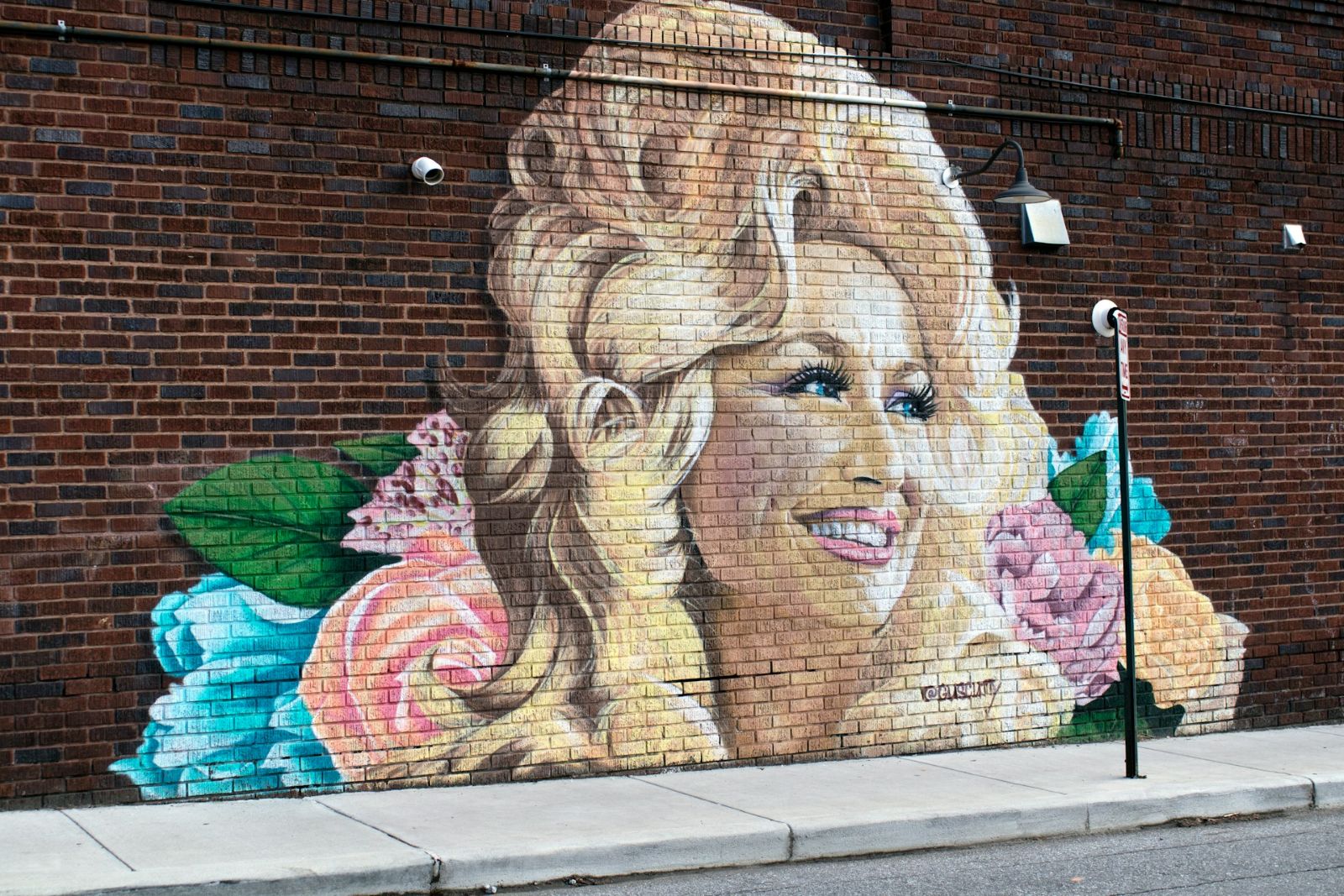
And in 2024, she told Absolute Radio Country, “I love and care about people for who they are and for who they are to me. And believe me, like I say in my own immediate family, and my circle of employees: I’ve got gays, I’ve got lesbians, I’ve got drag queens, I’ve got transgenders, some of everything in my own family. I just enjoy people for who and what they are.”
She could have stopped there – said some quotable things – but Dolly put her money where her mouth was. This woman could have been a billionaire but she wasn’t because she gave so much of her money away.
Her father never learned to read or write, and in response, she provided $15,000 scholarships to high school students. To improve middle school literacy rates in her home county, she gave each child $500 in cash upon graduation. In 1995, she started the Imagination Library, which donates books to children under 5. She invested proceeds from Whitney Houston’s 1992 cover of “I Will Always Love You” into a Black Tennessean community.
When the Gatlinburg fires broke out across Appalachia in 2016, she raised millions of dollars and gave everyone who lost a home $1,000 a month for six months with a final surprise $5,000 check as the program wound down. She made a significant donation in 2024 to support the victims of Hurricane Helene. In 2020, she donated $1 million toward finding a vaccine for COVID, and in 2022, she began offering full college scholarships to every Dollywood employee.
Dolly Parton was loved because she loved. Whereas some people are so greedy that they only care about amassing wealth, Dolly cared about people. And upon her death, the internet is ablaze with tributes. There’s a quote that says, “When you were born, you cried and the world rejoiced. Live your life so that when you die, the world cries and you rejoice.” That’s certainly true with Dolly. And for those of us still living, she offers a model of how to be. She shows that as much as divisiveness and discord seem to rule the day, kindness still counts and kindness will be remembered long after we’re gone.
I dream of a world where we understand fame and fortune are all well and good (or can be), but ultimately what matters is how we treat people. A world where we understand it’s the acts of kindness that leave a lasting impression. A world where we take a page from Dolly Parton’s book. A world where we remember kindness counts.
Another world is not only possible, it’s probable.
The other day, someone told me I matter and am important. It felt nice to hear and so I thought you, too, would like to hear it. To that end, I’m recycling this post from December 2015. Enjoy.
Sometimes I get in a nihilistic mood and think it doesn’t really matter that I’m alive, that I exist. In the grand scheme of things, I’m a speck, a peon, a flash in the pan of life. Furthermore, I think of myself as expendable and exchangeable in the sense that if I wasn’t here, someone else would accomplish what is required of me; that the universe would work through someone else.
The other day, though, I read something in Richard Tarnas’ book Cosmos and Psyche that had me rethink my perspective. He posits two ways of grappling with the universe and uses the analogy of two suitors to explain them. In the first approach, the suitor treats the universe as if it has no intelligence and is something to be exploited for his own gain. In the second, the suitor seeks to know you (the universe):
“[N]ot that he might better exploit you, but rather to unite with you and thereby bring forth something new, a creative synthesis emerging from both of your depths. He desires to liberate that which has been hidden by the separation between knower and known. His ultimate goal of knowledge is not increased mastery, prediction, and control, but rather a more richly responsive and empowered participation in a co-creative unfolding of new realities. He seeks an intellectual fulfillment that is intimately linked with imaginative vision, moral transformation, empathic understanding, aesthetic delight. His act of knowledge is essentially an act of love and intelligence combined, of wonder as well as discernment, of opening to a process of mutual discovery.”
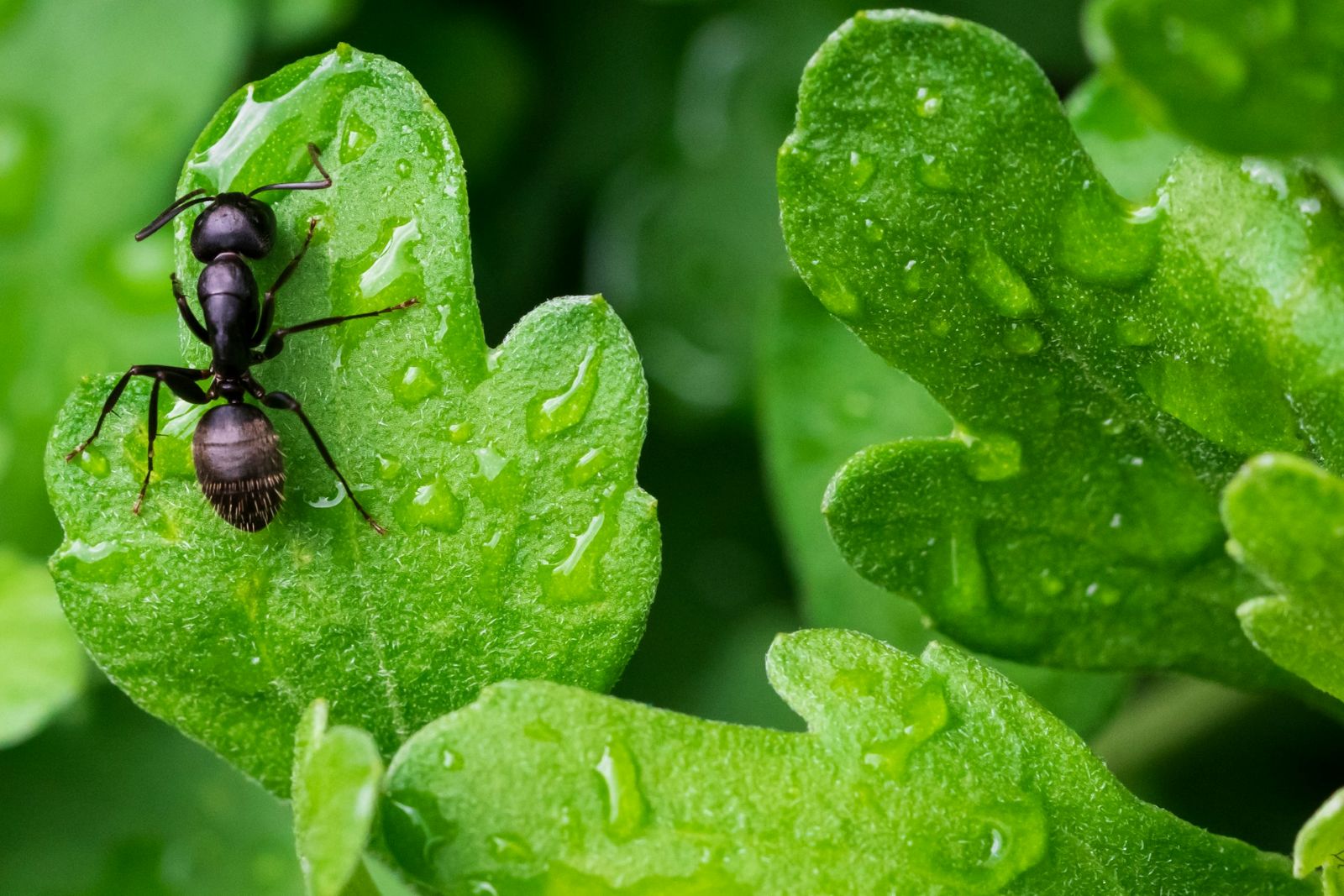
This photo will make sense later. Photo by Shannon Potter on Unsplash
Wow. That paragraph. Reading it, I realized it does matter that I’m here, that I’m alive at this moment in time. Not because I exist and therefore I matter – I can’t get behind that just yet – but rather because me being here, now, I am able to co-create something with the universe that otherwise would not have been birthed. Posted on my bathroom mirror is the question, “What does higher power want to work through me? And what part of self needs to step aside in order for that to happen?” God, higher power, the universe is working through me in a mutually fulfilling way whereby we both benefit. I, you, we have special gifts and talents that are not expendable, not exchangeable, and not unimportant.
My spiritual teacher says, “If one ant meets a premature death, it will disturb the balance of the entire cosmos. Therefore, nothing here is unimportant, not even an ant.” Later on, my spiritual teacher affirms that “Nobody is unimportant, nobody is insignificant. Each and every existence is valuable.”
I matter, you matter, we matter. We are here for a reason. If I remain stuck in an inferiority complex of sorts, I miss the opportunity for higher power to work through me, and I miss out on the creative synthesis Tarnas mentions. Part of that synthesis means valuing my part and not giving more significance to higher power’s because we are in a co-creative dance with the divine, and as they say, it takes two to tango.
I dream of a world where we recognize, yes, it’s true, we’re only here for a short time but that doesn’t mean we’re insignificant. A world where we understand our existence is important because through us, new things are being birthed that otherwise wouldn’t exist. A world where we realize our lives are more than a flash in the pan. A world where we understand that we matter, even when we think we don’t.
Another world is not only possible, it’s probable.
I have a funny story to share since my last post. I wrote that I have a juicer that’s been languishing on Facebook Marketplace and Craigslist for months. I did all the right things, included all the right keywords, posted the right pictures, and even published the ad at a time when I “should” have received the most traffic. People would message me about it and then disappear. I kept my hopes up, kept renewing the listing, but eventually I just gave up because it had been months and I still had the thing.
I completely wrote off the juicer, assuming I wouldn’t ever sell it, and then, out of the blue, someone wrote to me. I expected this to go the way of the others – initial interest and then no follow-through, but lo and behold, I sold it! Here’s what’s interesting: I didn’t renew the listing. I didn’t update the photos. I didn’t pray about it. I didn’t do anything.
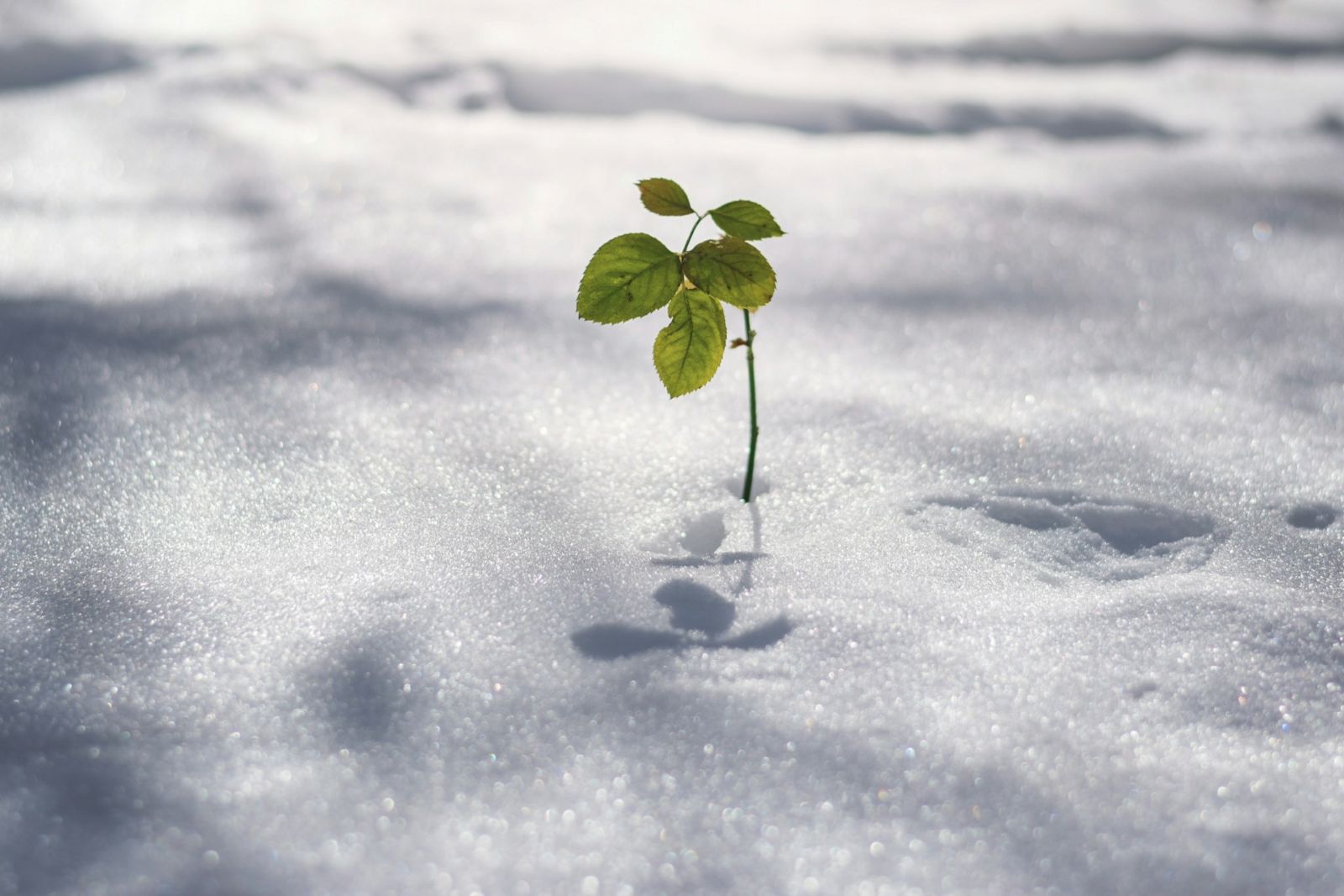
You may write it off as dead but it’s not. Photo by sina drakhshani on Unsplash
I want to be very clear and precise here because some people might hear that story and say, “See! It’s when you give up that you get what you want!” You can take away from the story whatever you want, but for me, that kind of thinking is dangerous and implies a sort of certainty that life rarely provides. “Do nothing” isn’t a secret to manifestation. I’m not saying, “Just give up on fill in the blank, and then it will happen!” Because who knows? Maybe it will. Or maybe you’ll need to wait two months or two years or two lifetimes for the thing you want to happen to happen. Or maybe what you want will never happen, ever.
My spiritual teacher speaks to this when he says, “whatever happens in this universe of ours is nothing but an expression of Cosmic desire or Cosmic will … when a human desire and His desire coincide, then only does the human desire become fruitful, otherwise it is a sure failure.”
Again, he’s not saying, “Give up! Surrender! Then you’ll get what you want!” He’s saying, “If the universe wants something to happen, it will; if not, no matter how hard you pray, it won’t come to fruition.” Sometimes hearing his quote brings me relief. Sometimes it spawns rage. Where I’m at now is recognizing the complete powerlessness I have. I don’t know when things will happen or if they’ll happen. It’s been made abundantly clear to me I have zero control over almost everything, including my own body. However, selling this juicer made me laugh, and it reminded me that maybe the things I’ve given up on are still viable. That what I wrote off as dead isn’t so dead and has some life in it.
I dream of a world where we remember when or how or if things happen is rarely up to us. A world where we understand that despite our best efforts, much of life is out of our control. A world where we recognize that even if we’ve written something off as being dead, it may not be dead after all.
Another world is not only possible, it’s probable.