I, like many, have been amused and surprised by the Louvre heist. As a quick refresher, at 9:30 in the morning, thieves in yellow vests scaled a truck-mounted ladder to the second-floor balcony of the Apollo Gallery, home to the French crown jewels, among other treasures. Using an angle grinder to force open a window, they took just four minutes to enter the room, cut open two cases displaying Napoleonic jewels, grab nine pieces, and flee back down the ladder, according to CNN.
Instead of focusing on the heist itself or the ethics surrounding museum acquisition, theft, etc., I want to talk about why I think the story is so compelling. The museum heist is giving major trickster energy. The trickster is an archetype that crosses and often breaks both physical and societal rules. Tricksters “violate principles of social and natural order, playfully disrupting normal life and then re-establishing it on a new basis,” according to author Lewis Hyde.
There are many myths about the trickster from Indigenous tribes, often centering around coyote, spider, or raven. Here’s an abbreviated version of a story about Raven demonstrating how the trickster often makes things better for everyone:
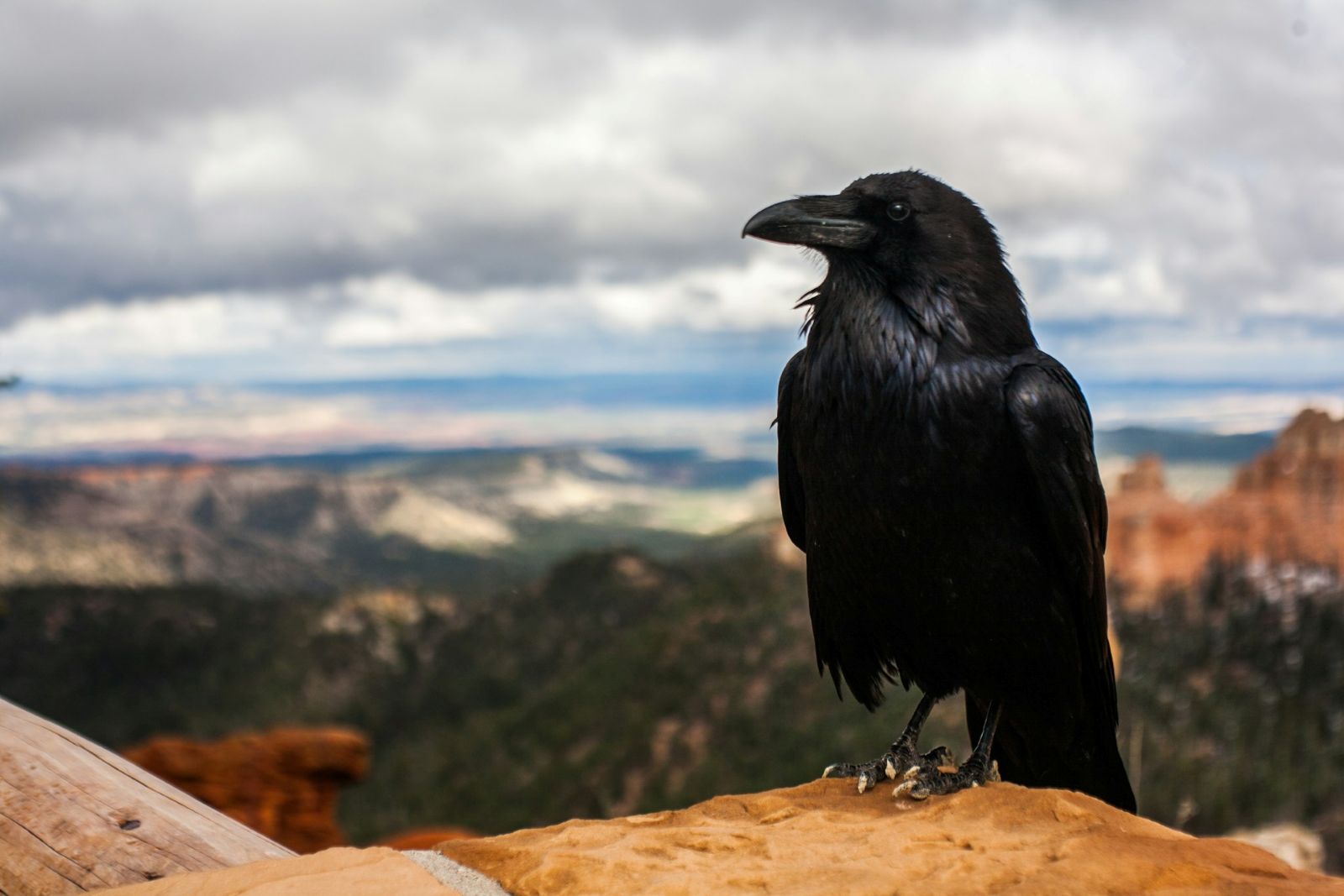
I really hope this is actually a raven. . .Photo by Tyler Quiring on Unsplash
Raven was told of a well with a never-ending supply of water. When Raven arrived, it learned the man who owned the well kept it covered and never left its side. He even built his house around the well and slept by it so that no one else could drink from it. But Raven began to scheme how to get this water.
Raven disguised itself as the man’s brother-in-law and went to the man, telling him he would stay the night with him. Both went to sleep, and in the early morning, Raven left and procured dog dung that he put on the sleeping man’s butt. Raven woke the man and showed him the “accident” he had in the night. The man, embarrassed, ran out of the house to clean up. While he was away, Raven drank nearly all the water, but he was caught when the man returned. Raven escaped and flew over the land, spitting water here and there, creating the great rivers of the world.
This is the myth certain Indigenous tribes use to explain the presence of great rivers, and while in this case the Raven did something good for all of humanity, I’m not sure that’s true for the museum heist. But what interests me about the trickster is many Indigenous communities think tricksters are essential, that they help us contact the sacred. Even in sacred ceremonies, tricksters are embedded in the ceremony and mock people, make crude jokes, and crawl down ladders headfirst. They do this because these communities say the sacred comes to us through upset, reversal, surprise.
Until I listened to the Emerald Podcast, I’d never heard of that concept, but it’s so true. Some of my biggest periods of transformation arrived on the heels of upset, reversal, and surprise. I want life to go according to my plans. I want things to be neat and orderly, but they never are. What if instead of fighting that, I accepted it? What if I made space for disruption because it’s going to happen anyway? We like to pretend it doesn’t or won’t but the museum heist, the political situation, heck, even the weather, demonstrate that disruption is not the exception, it’s the norm.
For me, welcoming the trickster means accepting upset, reversal, and surprise are a part of life. Just as life is a wheel, it’s also surprising. I don’t want to keep fighting that aspect or pretending I’m in charge or in control when I’m so clearly not. This is one of the biggest spiritual lessons I’ve had to learn over and over again: surrender. For today, surrender means not only accepting that the trickster is a part of life but actively welcoming it and saying, “I’m making space for you.”
I dream of a world where we understand things never go according to plan and they aren’t supposed to. A world where we recognize the trickster is an archetype for a reason. A world where we understand the sacred and profane are the two wings of one bird. A world where we welcome the trickster.
Another world is not only possible, it’s probable.
I can say unequivocally that “happily ever after” has screwed me up. A young part of me latched onto the idea that if I just do xyz, I’ll be happy forever. No more tears, no more sadness, no more hard moments – just frozen in a perpetual state of happiness until I die. We’re sold this narrative over and over again, but, well, life isn’t like that.
My spiritual teacher says, “Here in the universe, nothing is stationary, nothing is fixed. Everything moves; that’s why this universe is called jagat. Movement is its dharma; movement is its innate characteristic.”
Movement is the innate characteristic of the universe. Nothing is stagnant or static or stale. That means life itself also moves. Instead of a destination, someplace to arrive, life is like a wheel – there are ups and downs. Moments of contentment and boredom. I’ve been incredibly focused on happiness, but what if I accepted that’s not possible because there’s only happi-er, not happi-ness?
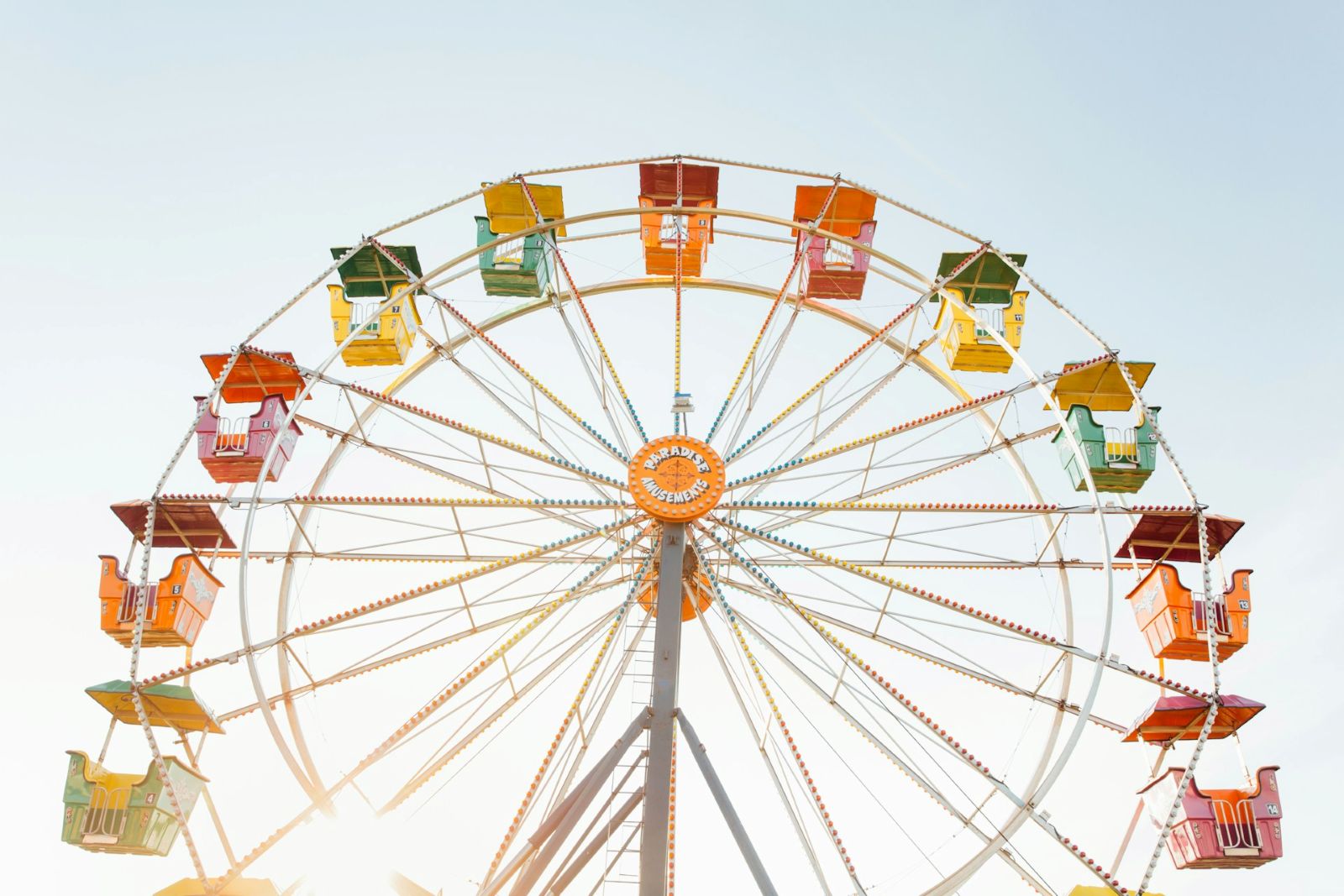
A Ferris wheel is still a wheel. . .Photo by Hannah Morgan on Unsplash
I haven’t read the book; I’ve only listened to interviews about it, but Oprah Winfrey and Arthur Brooks wrote “Build the Life You Want.” It’s a mix of scientific research, personal stories from Oprah, and actionable strategies. Something they say is, “Happiness is not a feeling.” We think it is, and then we chase after that feeling, but it doesn’t work. In part because of something called “hedonic adaptation,” which means we revert to our happiness baseline after a spike – for instance, getting a raise at work. It’s no longer the thing that makes us super happy – it instead becomes something normal.
Also, thinking happiness is a feeling means happiness will always be dependent on external circumstances. It puts us into the position of a reactor to life instead of an actor. What Oprah and Arthur emphasize is happiness is not the goal and unhappiness is not the enemy. I’m going to say that again: unhappiness is not the enemy, yet we often think it is. If we’re unhappy, we want to change it, do something, but it’s just as important to learn and manage the unpleasant emotions as it is to savor the pleasant ones.
Rather than escaping certain emotions, it’s better for us to learn from them because life is a wheel. We cannot outrun fear, anger, and sadness, no matter how hard we try. That doesn’t mean we’re doing something “wrong,” it just means we’re alive. How do we feel happier? According to Oprah and Arthur, becoming happier means relishing little joys, investing in friendships, serving others, having difficult conversations with people, finding purpose, and developing faith in something larger than yourself.
As for me, feeling happier starts with throwing “happily ever after” out the window and reminding myself life is a wheel – constantly moving, ever changing. If I’m not enjoying how I feel, I just need to wait a minute and I’ll likely cycle through something else.
I dream of a world where we recognize there is no happily ever after. A world where we understand happiness is not a feeling we can chase but rather an exercise in growth and development. A world where we realize unhappiness is not the enemy. A world where we accept that life is a wheel.
Another world is not only possible, it’s probable.
I was never a Girl Scout but you’d think I was because I’m always prepared. Not only do I have an earthquake kit, I also have a camping stove so I can still eat cooked food in that circumstance. If you need something, I probably have it. One time, I was in the car with someone who realized her food was undersalted, and I literally pulled out a mini salt shaker from my purse. Why am I like this? Because thinking ahead, preparing, and planning make me feel safer.
Sometimes this strategy works (i.e., preparing for an earthquake), but often it’s a waste of time because I imagine scenarios that never happen and conversations that never take place. Essentially, I try to predict the future so I can feel safe in the present. The thinking goes, “If I know what will happen, then I won’t be surprised, and if I’m not surprised, I’ll feel safe. I’ll be able to handle the situation.” But, well, I’m terrible at predicting the future. Even something as small as, “This is what I’ll be doing next week.” Over and over again, life throws me into unpredictable scenarios and situations.
A constant lesson lately – maybe it’s lifelong – is to stay present. Not only is joy found in the present, but safety, too. When I’m present, when I’m here, now, I can respond to what’s before me from a cool, level-headed place. It guards me against reactivity. When I’m present in the here and now, I’m accessing the wise self, the one who knows what to do. It’s tough because my default mode is to “future trip” or worry and obsess about the future.

Sometimes being here, now, means putting a hand on the heart. Photo by Fa Barboza on Unsplash
Again, I do this because I want to feel safe. It’s not a character flaw – it’s a coping strategy. But what I’m learning is there are better ways to cope. Instead of imagining what I’ll say to so-and-so or contemplating whether XYZ will happen, I’m coming back to me. It’s better for me to say to my inner child – because let’s be real, it’s usually her who is freaking out – “I’m here. I’m not going anywhere. I’m not ever going anywhere. I can handle this. You don’t need to worry about it.”
Even typing that I exhaled deeply, which is a sure sign that I’m relaxed and regulated. Relaxed and regulated equals safe. When I don’t feel safe, my breathing is fast and shallow; I’m not grounded, and not in my body. And that brings me to my next point – what I’m learning is that safety is something that must be felt in the body by bringing in the body.
Gabor Maté says, “Safety is not the absence of threat; it is the presence of connection.” Sometimes that means being connected to others, but sometimes that means being connected to the self. I can’t control what other people are doing, but I can control what I’m doing. I can connect with myself not by spinning out about future scenarios but by being here, now. I can connect with myself by putting my hand on my heart and talking to myself like I would a friend. I can connect with myself by letting my exhales be longer than my inhales.
I care a lot about safety and what I’m learning is that it only exists in the present. And furthermore, it only exists if I’m connected – to myself, to others, and to the Divine Beloved. May you also experience that connection, if you so wish.
I dream of a world where we understand we can’t always think our way into safety. A world where we understand we can prepare for some things but not others. A world where we recognize safety happens in the present. A world where we let ourselves feel safe by connecting.
Another world is not only possible, it’s probable.
I watched a clip of Netflix’s “Famous Last Words: Jane Goodall” and started tearing up. That woman was an icon, a messenger of hope, and someone who remained consistent until her dying breath. She exemplified neohumanism, a concept in my spiritual tradition, that begs the question, “What is the boundary of your identity?”
Neohumanism encourages bridge building not only with other people, but also with plants and animals. For Jane, she saw animals not as heartless brutes, but as beings that have rich inner lives just as humans do. They cry, experience joy, and have other emotions. From a Mongabay news piece I read, “She blurred the categorical wall that placed humans above other animals. Her work became foundational not only for primatology, but for animal welfare and environmental ethics.”
But she wasn’t an animal rights activist who said, “Screw all the humans! You’re terrible!” Instead, she tried to connect with people she didn’t see eye-to-eye with. She said, “If you don’t talk to people you disagree with, how can you expect them to change?” She understood that being a purist or isolating yourself from others only creates more isolation, and what this planet actually needs is people working together.
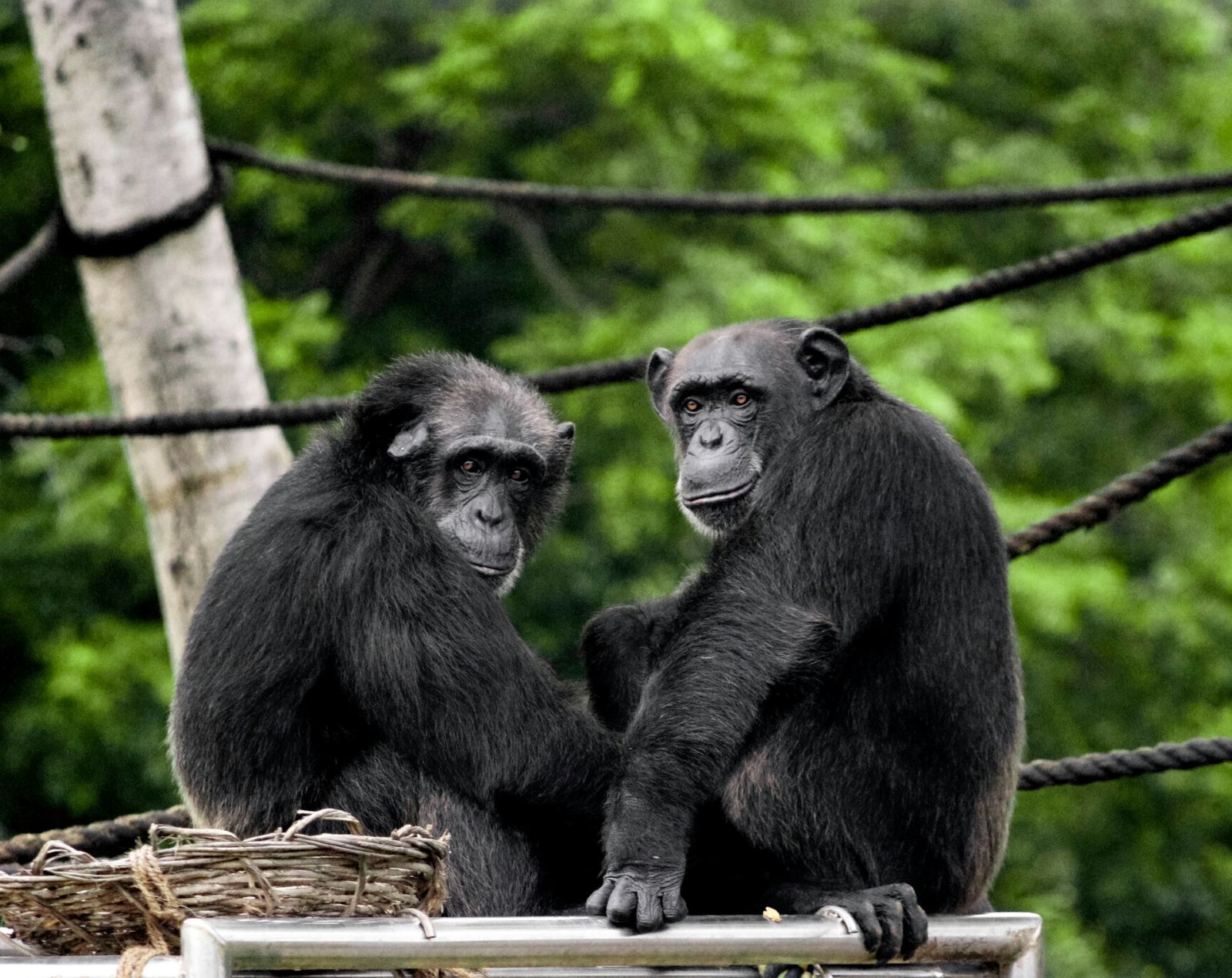
In honor of Jane, of course. Photo by Satya deep on Unsplash
Jane also followed up her words with actions by creating Roots & Shoots, a youth action program that empowers young people to be the change in their communities. It spans more than 140 countries and has projects ranging from recycling drives and community gardens to tree-planting campaigns and animal rescues. Underpinning the youth movement, and Jane’s ethos in general, is that every action matters.
“You cannot get through a single day without having an impact on the world around you,” Jane often reminded her audiences. “What you do makes a difference, and you have to decide what kind of difference you want to make.”
I keep thinking about that quote, and like I wrote about last week, that each of us has influence even if we’re not an influencer. If we accept it as fact that we impact the world every single day, what kind of impact do we want to have? Some people are hellbent on impacting the world negatively by cutting healthcare access, deporting immigrants, or laying off workers so they can further line their own pockets.
In response to those people hellbent on negatively impacting the world, it feels like everyone and their mother is asking, “How are you working to stop them?” I have idiopathic hypersomnia and panic in crowds, so I’m not capable of being in the streets. I can’t join the protests, the marches, the trainings. And I have a loooot of feelings about that. But that doesn’t mean I’m not impacting the world around me. It doesn’t mean I’m not making a contribution.
I’m not a perfect person. I make mistakes. Sometimes I’m the villain in someone else’s story. But more often than not, the contribution I make is one of kindness, empathy, and authenticity. I may not speak in front of millions, but I’ll chat with a friend for an hour so she feels seen and heard. I may not join a protest, but I’ll show up for my friend’s film premiere. Even though those actions are small, they, too, make a difference. And they’re the sort of difference I want to make.
I dream of a world where we all embody the virtues Jane Goodall emphasized as much as we can. A world where we continue to have hope, show compassion, and see every being as worthy of love and respect. A world where we understand every day we make a difference, and we consciously choose what kind of difference we want to make.
Another world is not only possible, it’s probable.