You may already know this, but AI safety researcher Mrinank Sharma resigned recently. That’s not really news in and of itself – people leave their positions all the time. No, the newsworthy part is that he left Anthropic, best known for its chatbot Claude, to study, drumroll please: poetry. Yes, poetry.
The context is what makes the whole thing fascinating. My friend and narrative astrologer Ada Pembroke sums it up nicely: “[S]omeone who spent years trying to build AI safety guardrails has decided the answer isn’t better guardrails. The answer is wisdom. And he’s going to look for wisdom the way humans always have: through art, through language that means more than one thing, through the practice of courageous speech.”
To be honest with you, I struggle with poetry. I’m a highly literal person and I want people to say what they mean and mean what they say. But Ada suggests poetry is powerful precisely because it’s not that (mostly). Poetry collapses multiple symbols all into one. It encourages us to dive deeper, to look again, and that’s what AI cannot do because it, too, is very literal. And per her second point, poetry can be courageous.
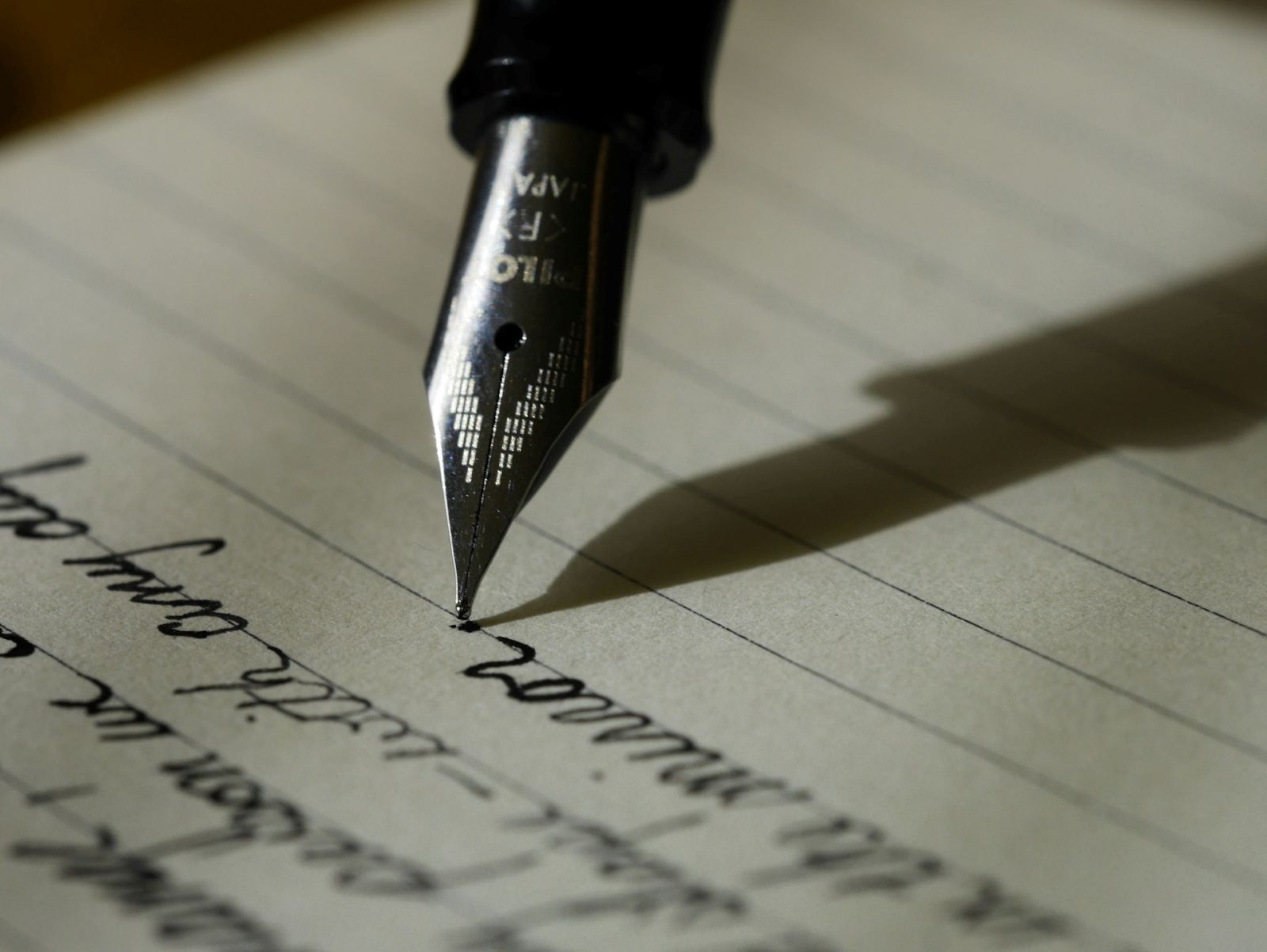
The pen is still mighty! Photo by Aaron Burden on Unsplash
I’ve known for ages that journalists are frequently jailed for their writing. Reporting the truth can be dangerous in a time when governments want to function on lies. What permeated my brain less is that poets are also jailed. In 2024, 375 writers were jailed in connection with their speech, according to PEN America’s Freedom to Write Index, and 67 of them were poets. In Myanmar, poets led protests with poetry readings to support civil resistance following the military’s February 2021 coup; several were arrested and detained.
In Iran, poets who posted and recited poetry on social media were arrested by authorities looking to silence support for the Woman, Life, Freedom movement. In a few places, poets are jailed not for months but for years. As PEN America puts it: “Authoritarian leaders target poets because their words – filled with lyricism, story, and feeling – can expose the cracks of oppression in daily life.”
My spiritual teacher encourages people to make art not for art’s sake but for service and blessedness, meaning, to spur their love of the divine. He says artists are pioneers and can lead society forward. Literature in particular is “that which moves together with the society, which leads society towards true fulfillment and welfare by providing the inspiration for service,” he says. “People seek deliverance from the whirlpools of darkness; they aspire to illuminate their lives and minds with ever-new light. In all their actions, in all their feelings, there is an inherent tendency to move forward; therefore, if at all they are to be offered something, the creator of art cannot remain idle or inert.”
What my spiritual teacher is pointing to is the power of art. It’s not merely commerce, a way to make a quick buck, but a tool for good or evil. Art influences people, whether they want to admit it or not, and in this age of AI slop, original, human-created art that speaks to the times we live in is potent.
I dream of a world where we remember that art still matters. A world where we understand there can be more to art than just amusing people or trying to capitalize on a trend. A world where we remember art and literature can be a tool of service and inspiration. A world where we recognize the power of art and use it accordingly.
Another world is not only possible, it’s probable.
When life gets stressful or complicated, I notice a tendency in me (and in some people I know) to make things even more stressful, even more complicated. I don’t know why exactly, but I suspect it’s because when people are scared, they start scanning for threats and want to resolve them all. It feels protective to try to fix everything. I don’t know about you, but for me, that only makes things worse.
Trying to do more when I’m already stressed and overwhelmed only ends in disaster, and my body pays the price. So instead, I have to remind myself, “Keep it simple.” Instead of raising the bar, I lower it. Rather than making dinner from scratch, I heat prepared food. Rather than making big decisions, I set those aside. It’s not what I want to do, but I’m learning that when I’m running hot, for whatever reason, the best thing for me is to turn down the temperature. This is also the advice I’m giving to others.
A few of my friends are going through some major challenges and they’re spinning out about what’s next. When they call me, I’m not helping them problem-solve (usually). Instead, I say to them, “Breathe with me. Inhale for four seconds, hold for two, and exhale for six.” And then we do that together for a couple of minutes. That’s it. Just breathe together. And then to orient them to the here and now, I ask them to tell me five things they can see, four things they can touch (and actually touch them), three things they can hear, two things they can smell, and one thing they can taste.
So simple. So lovely. Photo by Tyler Lastovich on Unsplash
We make everything very simple. We come back to this body, this breath, and then the very next right action. That could be making dinner or taking a shower or going to bed. Big decisions, ferreting out the truth, and analyzing the world are activities for when we’re regulated, not when we’re activated. There’s a part of me saying, “Really, Rebekah? You’re writing about self-regulation and keeping things simple? That’s the message you want to share this week? Not explaining the origins of the universe? Or illuminating some grand spiritual concept? This? This?” The answer is “yes.”
One of my favorite quotes about spirituality is, “There’s only one path to God, and that’s through the spine.” Some people think of spirituality as something “out there,” or that the human body is a nuisance. It’s not. The body is the path to enlightenment because everything happens to or in the body. And so that means in some ways there’s nothing more profound, nothing more sacred, than taking care of this form. And “taking care of” isn’t just eating nourishing food and exercising. It’s also supporting the nervous system. It’s actively putting ourselves back into a place of spaciousness.
Note that I said “spaciousness” and not “calm.” That was intentional because there are times we shouldn’t be calm. There are times when it makes complete sense to feel angry or sad or scared. But you can feel angry and not become reactive. You can feel sad and not let it consume you. That’s what breathing deeply and orienting toward the physical space around you does – creates a little more separation, a little more choice.
In this day and age where there are about a billion things that can elicit strong emotions and keep us operating from our limbic systems, I can think of no more powerful suggestion than, “Keep it simple.” Because when we do, we’re telling ourselves, “I matter.” And that’s true.
I dream of a world where we understand that when we want to complicate things, that’s likely when we most need to simplify. A world where we pause, breathe, and orient to what’s before us. A world where we do the next right action. A world where we keep it simple.
Another world is not only possible, it’s probable.
I wrote this post in April 2019 after I was fired from a job that wouldn’t let me work from home two days a week, despite having a doctor’s note saying I needed that setup. Oh, the irony that a year later everyone was working from home. . .Despite different circumstances, this post is still relevant today. Enjoy.
You know how people say most of the things they’re afraid of never happen? The opposite is true for me – most of the things I’ve feared have happened. Not the fleeting, “I’m scared I’ll miss my flight” things, but the “I’m scared I’ll be broken into” things. The recurring fears, the ones that cause my stomach to roil and my chest to constrict.
I want to take a moment here to recognize my fears are those of a privileged white woman. I totally understand that other people lead tougher lives than I do, with fears greater than mine. I understand I have a relatively easy, cushy life. I’m not here to get into a competition about that. Rather, the point of this post is to talk about fear and resilience.
For much of my life, I’ve braced myself for terrible things. I’ve done my best to ward them off, but they happened anyway. And because they happened, I feel less afraid now. I no longer have to fear the worst because the worst has happened and I’ve lived to tell the tale. It also means I know how to take care of myself in challenging times. If I have to endure a hardship again, I will because I did before.
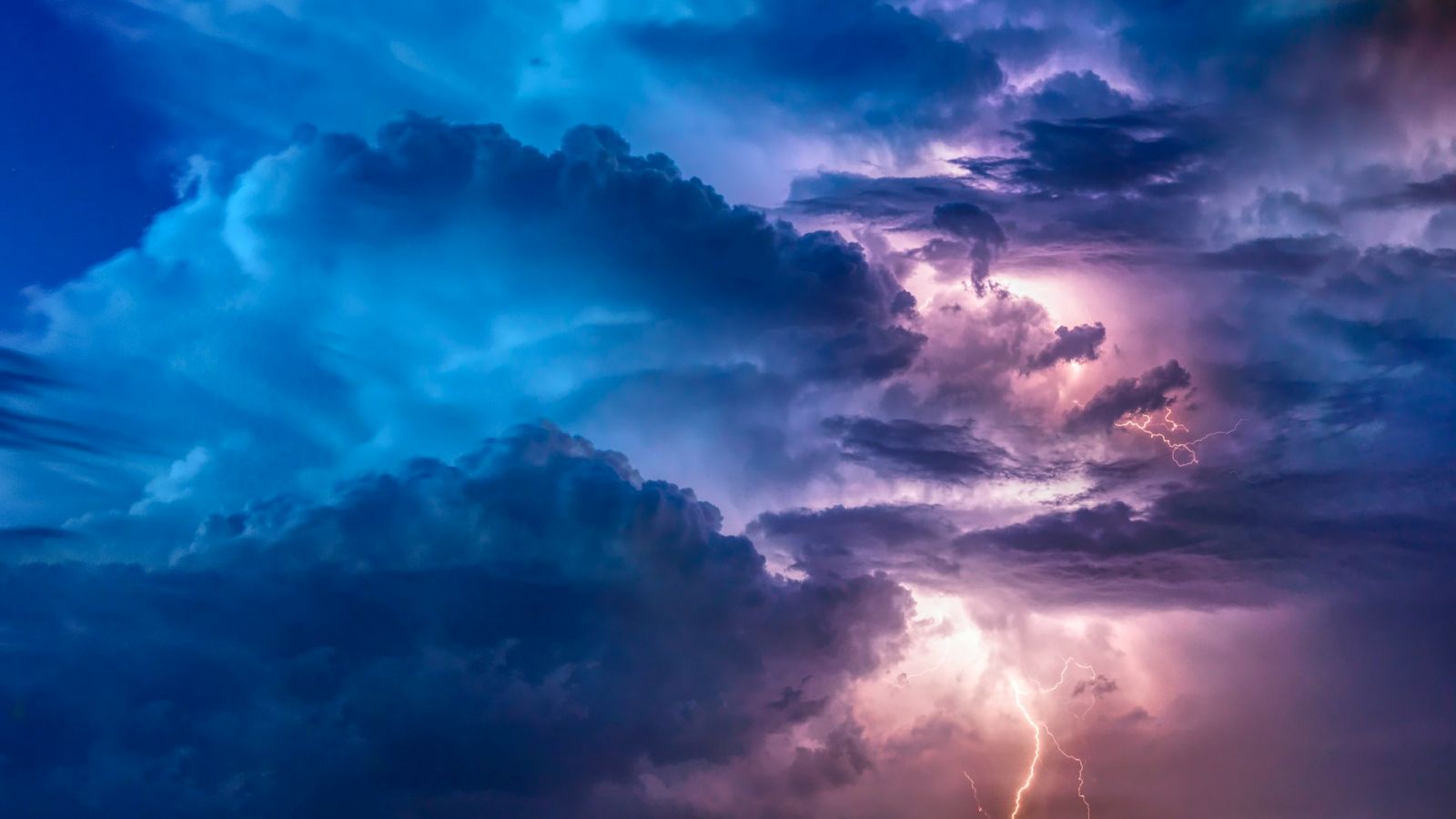
We are more powerful than we know. Photo by Felix Mittermeier on Unsplash
Researcher and storyteller Brené Brown writes about this character trait, resilience, in her book Rising Strong. She said, “While vulnerability is the birthplace of many of the fulfilling experiences we long for – love, belonging, joy, creativity, and trust, to name a few – the process of regaining our emotional footing in the midst of struggle is where our courage is tested and our values are forged. Rising strong after a fall is how we cultivate wholeheartedness in our lives; it’s the process that teaches us the most about who we are.”
Check and check. I used to think of myself as a scaredy cat. As someone sensitive and fragile. And I am, but at the same time, I’m also tough. I’m brave. I’m strong. I’m resilient. I pick myself up again and again. When life kicks me in the teeth, I collapse, I cry, but then I do the hard thing and move through it. I’ve already surmounted many obstacles in my life. And I know if I don’t currently have the tools to get through whatever is before me, I will hunt tirelessly to find the right ones. This ties into spirituality because the backbone is faith.
My spiritual teacher says over and over again if a person takes shelter in the Supreme, they need not be afraid of anything in this world. That the divine is “more courageous than the most courageous and braver than the bravest. Those who take shelter in [the divine] are therefore bound to acquire these qualities: courage, bravery, chivalry, and so on. Once endowed with such qualities, what is there to fear?”
I’m a human being, so I still fear many things, but I know the more I lean into the presence of my higher power, the better I feel. The more I surrender, the more I recognize everything is an expression of an infinite loving consciousness; the more relaxed I become, and also the more fearless. There’s a quote floating around about how the devil whispered in a warrior’s ear: “You’re not strong enough to withstand the storm.” And then the warrior responded, “I am the storm.” That’s what it feels like right now. And if you’re going through a hard time, I hope you can muster up that same spirit.
I dream of a world where we recognize our resilience. A world where we understand we’re able to tackle all the challenges coming our way. A world where we become more and more fearless because we understand not only are we strong enough to withstand the storm, but that we are the storm.
Another world is not only possible, it’s probable.
Something that’s on my mind a lot is the desire for one-and-done. I want the magic pill, the silver bullet, the “do this once and everything is fixed” solution. I see this in myself but I also see it in the rhetoric we use when talking about the world writ large. “Save the world,” we say, as if the planet is in need of rescuing. That’s what “saving” means, by the way, to rescue from impending danger. Here’s the thing, though: When in human history have we as a species not been in impending danger? Seriously, when?
Our ancestors were in danger on a smaller scale but no less threatening – danger from food scarcity, warring tribes, diseases, and more. As we edged toward globalization, the threats became even larger and more climactic, literally. We still have danger from food scarcity, war, and diseases, but now we also have danger from things like extreme weather. And as we’re seeing, we’re all connected. A storm in the northeast can affect people in the southwest.
We talk about saving the world as if we haven’t had to confront these issues a million times in the past. As if we haven’t already had to deal with government-sanctioned murder. As if we haven’t already faced extreme exploitation or inequality. As if we haven’t already dealt with harsh weather conditions. The circumstances, the specifics, they are all different, yes, absolutely. But the heart? The themes? Practically timeless.
Maybe it’s more about relationality. Photo by Alin Andersen on Unsplash
So what I keep wondering is, can the world be saved? Is there a silver bullet that fixes everything? Very clearly, the answer is “no.” When we talk about “saving the world,” we couch it not only as a one-time fix, but we also subtly create this individualist burden. Doing so makes “saving the world” your personal responsibility. But it’s not. We are in relationship with this planet and each other. No one person can “save” the world and nor should they.
Something my spiritual teacher talks about frequently is “coordinated cooperation.” It’s when cooperation is between free human beings, each with equal rights, mutual respect for each other, and they are working for the welfare of the other. What we see more frequently is subordinated cooperation, which is the traditional power structure whereby power is top-down. It’s someone, or a group of someones, imposing their will. But it never works.
To quote my spiritual teacher, “Only the cooperative system can ensure the healthy, integrated progress of humanity, and establish complete and everlasting unity among the human race. People should work to enjoy sweeter fruits by establishing the cooperative system.”
A cooperative system cannot exist if one group is considered inferior to another. Nor can coordinated cooperation exist if it’s imposed upon the group. I believe the same is true with the planet as a whole. We humans think we know what the planet needs, but how can we possibly know if we don’t have a relationship with it yet? That’s like us diverting a river and then being surprised when there are unintended consequences.
I don’t think the world needs to be “saved,” I think it, and we, need empowerment via mutuality and relationality. The planet as a whole needs tending, serving, stewarding, not domineering. Not imposing power over, but power with as an equal player, an active participant. And part of being an active participant means recognizing there is no “one-and-done.” There is no magic pill or silver bullet. If we want to serve the world, if we want to shepherd it into a more harmonious place, we do that over and over again, one day at a time.
I dream of a world where we recognize we aren’t saviors, we’re stewards. A world where we recognize no one person has the power to solve everything all at once. A world where instead of creating power over, we create power with. A world where we understand if we really want to support people and the planet, it requires an ongoing, mutual relationship, not a white knight.
Another world is not only possible, it’s probable.