I’m a little bit pedantic and feel irritated whenever someone says something like, “Remember, pressure is what turns coal into diamonds.” Friends, it does not. Diamonds are pure carbon, whereas coal is carbon mixed with other elements like sulfur, nitrogen, hydrogen, and oxygen. Also, their location is different. Diamonds are between 90 and 190 miles underground. Coal is much closer to the surface. In other words, no amount of pressure is going to turn coal into a diamond.
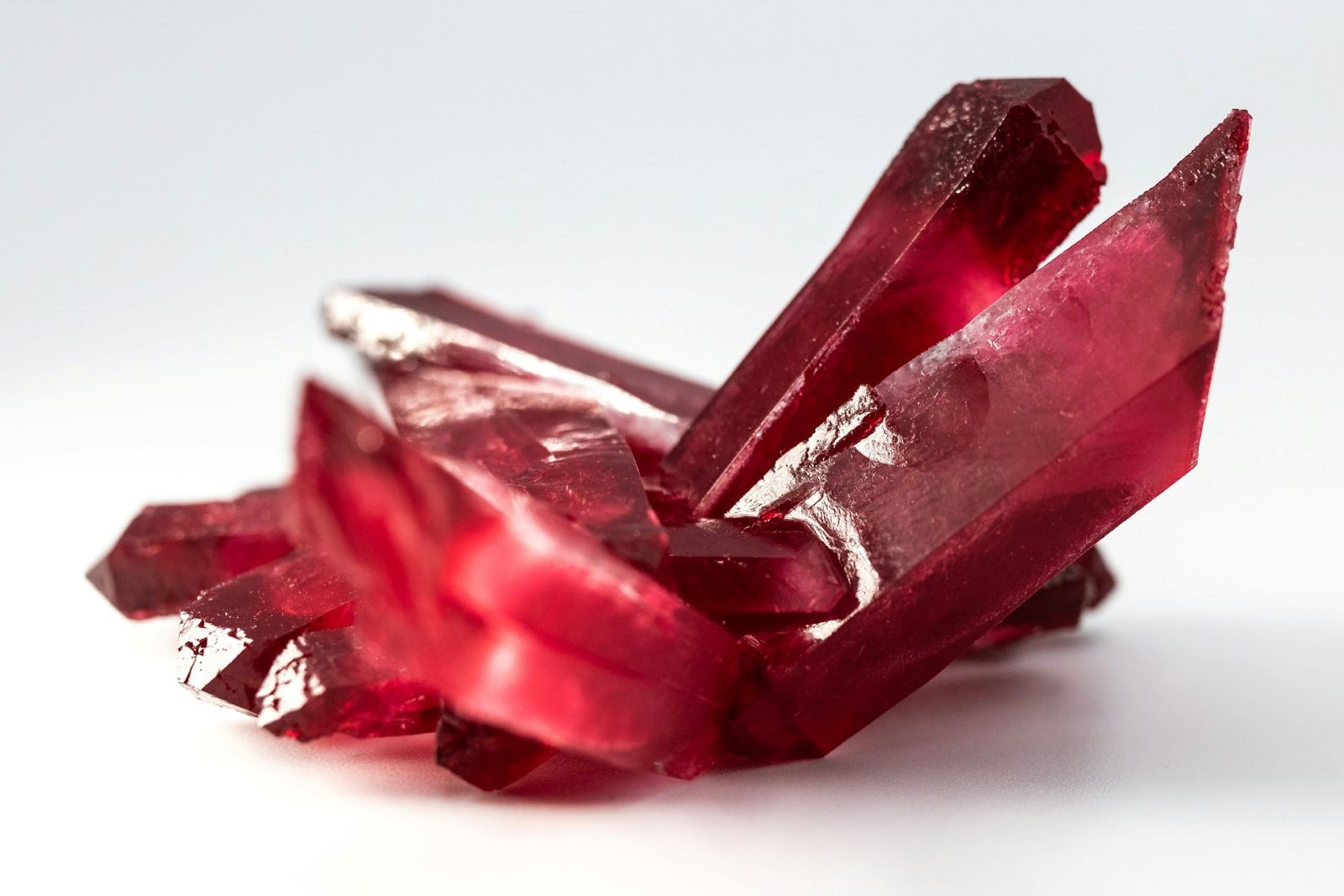
I appreciate the sentiment. When we’re suffering, or life is stressful, it’s nice to believe it will mold us into something. That all the trouble won’t be for naught. I have good news for you – there are some examples where this does work scientifically. For instance, rubies, sapphires, and garnets are born from stress. When tectonic plates collide, ordinary aluminum-rich crustal rock is subjected to crushing force and searing heat. The original rock completely recrystallizes at a molecular level and becomes one of those beautiful gemstones.
Also, making hand-forged Damascus steel requires a tremendous amount of heat and force as well. A blacksmith heats raw iron to a glowing, volatile state, then strikes it repeatedly with heavy hammers. To create the beautiful, wavy “water” patterns and strength of the blade, the steel must be folded over on itself, smashed flat, and reheated dozens or hundreds of times. This is a literal “testing by fire.” And rather than breaking the steel, repeated folding creates something beautiful, complex, and practically unbreakable.
My favorite example, though, is star formation. I’ve never really thought about how a star is born. In my mind, they sort of just exist until they die, and death is more like a slow fade because they stop shining so brightly. But according to Google, stars start as cold, chaotic, dark clouds of scattered gas and interstellar dust. And then eventually, gravity pulls the cloud inward, packing the particles tighter and tighter. The pressure and density reach such a violent, suffocating extreme that the core ignites in nuclear fusion. Boom! A star!
First there’s darkness, and then “crushing gravitational confinement,” and then light. Isn’t that amazing?!? I find that much cooler than a diamond. I mean, we have lab-grown diamonds now. They’re kind of common. But lab-grown stars? Those don’t really exist. Researchers can create mini stars in labs, but they aren’t real stars because the lab ones are held together by lasers or magnetic fields, not massive natural gravity. Also, these mini stars only shine for tiny fractions of a second, or just a few seconds in magnetic traps, before they collapse. They don’t shine brightly for billions of years. Not like a real star!
Something I keep thinking about is how stress and pressure will change you. We all hope it will be for the better, but sometimes it’s not. There are some things that make you a fundamentally different person, and not in a good way. I want to acknowledge that while also saying what I’m hoping for, what I’m aiming for, is rocks into rubies and darkness into light. And that’s what I want for everyone else too.
I dream of a world where we remember that no matter how hard you crush coal, it will never turn into a diamond. A world where we understand stress, pressure, and force can create something beautiful and new. A world where we recognize rocks are turned into rubies and darkness becomes light.
Another world is not only possible, it’s probable.