I, like many, watched the Artemis II mission with rapt fascination. It was incredible to see so many updated images of the moon and Earth. But it also had me pondering our strong connection to the moon. People talk about how the moon governs water, and the human body is about 60% water, so the moon governs us, but science doesn’t substantiate that.
And while that and other statements about the human connection to the moon are largely myths, there are some grounded, scientific studies showing the moon tangibly affects life on Earth.
A study published in Science of the Total Environment found:
“Many factors affect sleep, including age, sex, illness, children, family status, exercise, medication and the environment. Based on this study, we can also say that the lunar cycle affects the duration and quality of sleep and that this effect is more pronounced among men.”
I know I have more trouble sleeping around the full moon, but it’s nice to hear I’m not alone with that and no, it’s not all in my head. What I find even more fascinating, though, is some scientists say life on Earth wouldn’t exist without the moon.
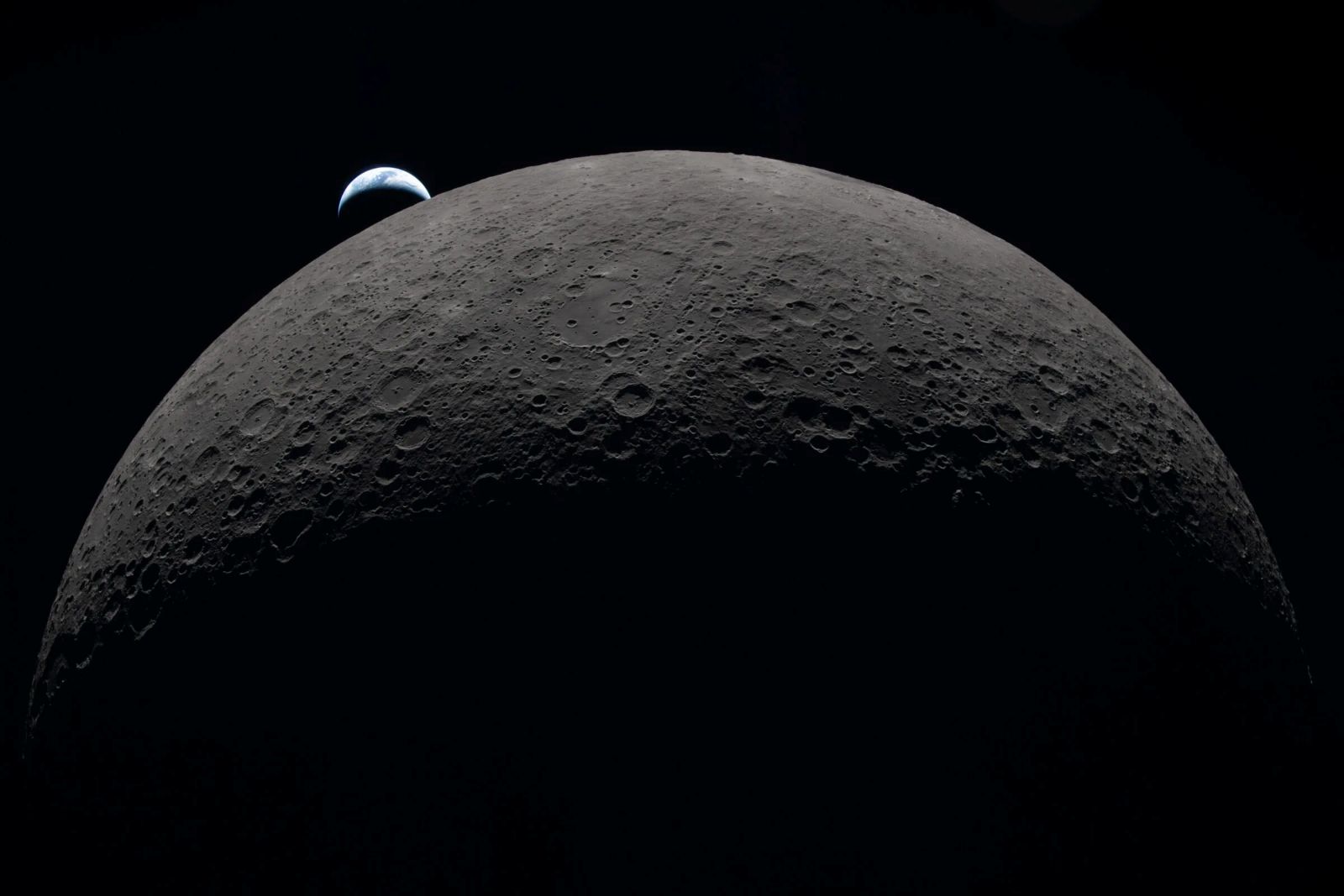
Earth sets over the Moon’s curved limb in this photo captured by the Artemis II crew during their journey around the far side of the Moon. Image courtesy of NASA
A Scientific American article from 2009 said, “Odds of nucleic acids forming on Earth without the lunar tides would be much lower.” I know it’s not a statement said with full certainty, and it allows for many possibilities, but still, we can flip it around and say, “It’s highly likely nucleic acids, the building blocks of all life, formed because of lunar tides.”
Another study backs this up. Published in the Journal of Molecular Biology in 2020, the researchers state:
“Starting with the beginning of the last century, a multitude of scientific studies have documented that the lunar cycle times behaviors and physiology in many organisms. It is plausible that even the first life forms adapted to the different rhythms controlled by the moon. Consistently, many marine species exhibit lunar rhythms, and also the number of documented ‘lunar-rhythmic’ terrestrial species is increasing.”
They add that the lunar cycle has been shown to synchronize a plethora of biological processes such as reproduction, photosensitivity, migration, and more. “[P]robably the most spectacular and documented event orchestrated by animals according to the lunar cycle is certainly the mass spawning of corals,” they write. “Like inside a shaken snow globe, once every year, the barrier reef explodes with eggs and sperm, a few days after the full moon, during late spring/summer nights, a phenomenon even visible from space.”
In other words, the moon isn’t just a “pretty thing to look at,” it affects life itself. What I appreciate about this perspective is the reminder nothing is separate, nothing is removed. We are embedded in an ecosystem with constant relationality. We humans like to pretend we’re somehow exempt from the world around us. That we’re unaffected by the laws of nature. Like there’s “nature,” and then there’s “us,” when that’s patently false. We quite literally evolved in tandem with the moon.
Beyond being a cool little factoid, I’m touched by this perspective because it reminds me no matter how alone or isolated I may feel at times, I am deeply, irrevocably tied to something larger than myself. In this case, it’s the moon.
I dream of a world where we recognize the moon isn’t just a cool object in the sky. A world where we understand life on Earth likely evolved in direct relationship with the moon. A world where we realize we aren’t alone or exempt from nature. A world where we remember our deep ties to the moon.
Another world is not only possible, it’s probable.