On Saturday, I visited my old San Francisco neighborhood for the first time in years. It was weird to compare what it used to look like to what it looks like now. It was also strange to be there and remember the person I used to be. My friends asked me if I missed living in the city, and the truthful answer is no.
It’s funny because in 2012, when I began my period of moving on average every three months for three years, I cried buckets over no longer being in SF. It was a heartbreak on par with a breakup. I’d spent ages longing to move to San Francisco, dreaming about it, imagining what my life would be like, and then when I arrived, it was the culmination of a dream. I loved being in the city. I loved the convenience, the ease, the energy. I woke up every day grateful I lived in San Francisco.
And then, the universe basically forcibly removed me. My dream became a nightmare. My building put up scaffolding to paint the exterior, and I kept telling management I was worried someone would break in. And guess what? They did! Not to my apartment, but still. And then, because of the paint job, my windows were covered so I couldn’t even see outside, and barely had any sunlight. Add in not sleeping through the night, and it was truly a waking nightmare.
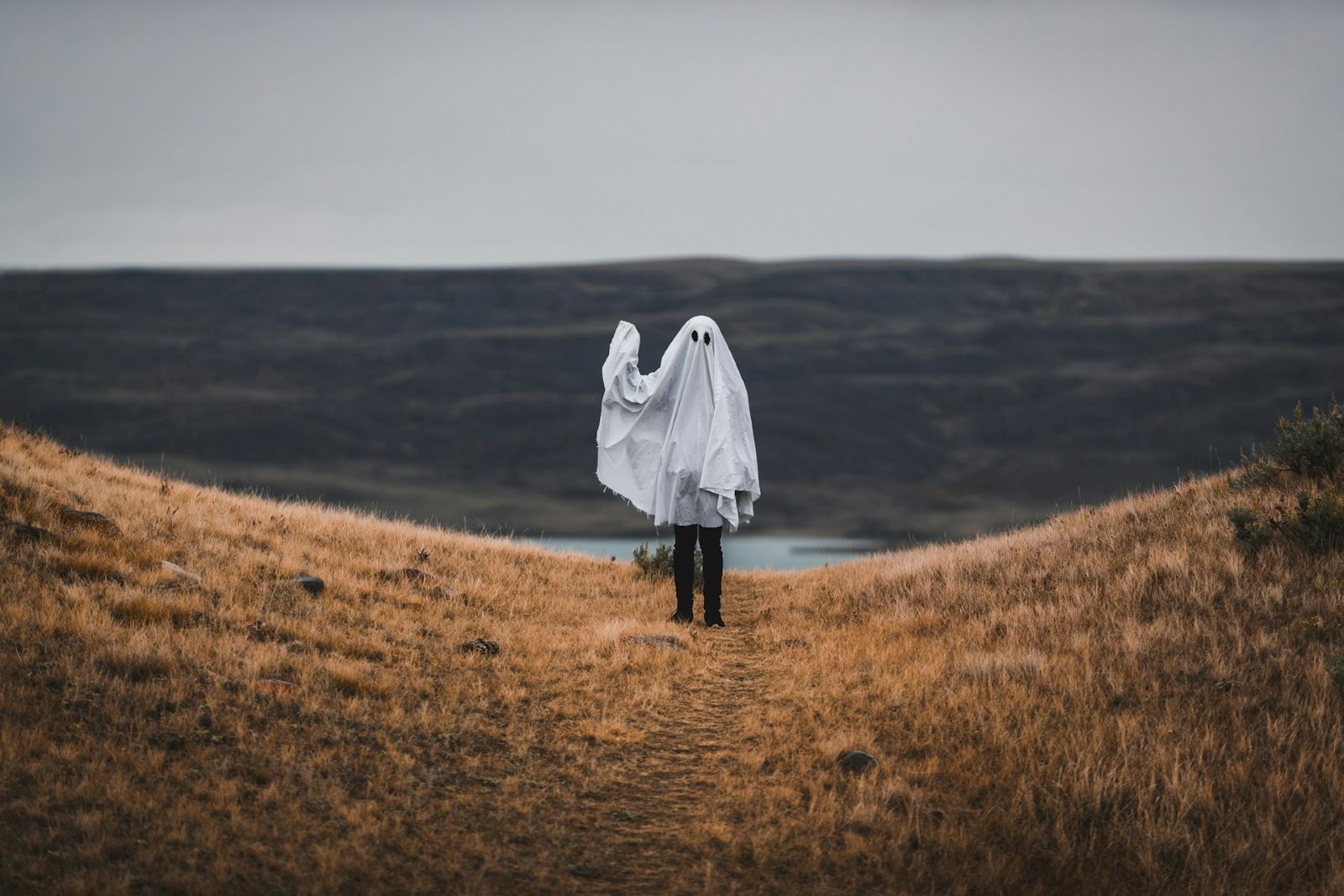
Hello past self. Photo by Tandem X Visuals on Unsplash
I left SF, but I wasn’t happy about it. I wrote poems about it, longed for the life I had, but kept moving forward. And now, I’m so changed that whenever I return to my old neighborhood, it’s like those feelings, that life, belonged to someone else. It’s like I’m confronting the ghost of my past self. That makes sense given what my spiritual teacher has to say about death and change.
He says, “A 5-year-old child is transformed in due course into a 15-year-old boy. In 10 years, the child becomes the boy. Thereafter, you will never be able to find the body of the 5-year-old child. So the child’s body has certainly died.” He then goes on to mention the boy growing into a man, and then hitting middle age, then old age, until he finally dies and says, “The rest of the changes we do not call death; but in fact, all the changes qualify as death.”
All the changes qualify as death because the person who used to exist cannot be found anymore. That’s me. I have died many times and will do so again. And it’s true for all of us. We’re constantly undergoing a metamorphosis. We’re constantly dying and being reborn. We all have many “ghosts” walking around. The people we used to be, and aren’t any longer.
Normally, I’d feel sad or tender about that, but it can also be something wistful or neutral. I have gratitude and appreciation for my past self, for the young woman who so desperately wanted to move to San Francisco and did. But I’m not that person anymore. These days, I have new dreams, new desires, and new selves to meet. And I’m sure that one day in the future, I’ll look back and think of this current self as a ghost, too.
I dream of a world where we recognize change is constant, not only in the world but in ourselves. A world where we understand that we will all die many times while we live. A world where we recognize there are many ghosts of our past selves walking around.
Another world is not only possible, it’s probable.
The title for this post is courtesy of Bryan Franklin who gave a TED talk titled “The most dangerous question on Earth.” He spent the majority of his talk on the qualities of a good entrepreneur and one of them is the ability to hold paradox. For instance, we matter but at the same time we don’t matter. He said, “You can touch a life so deeply and so profoundly that the impact of your loss would never be forgotten … the ripple effect of your impact is unfathomable. And also the magnitude of your insignificance is equally unfathomable … you are barely dust.” Holding the paradox means giving equal weight and importance to both, letting neither diminish the other. Holding the paradox means not taking sides but rather allowing both.
The paradox I’m holding is happiness and sadness. Until yesterday I was in Washington, D.C. for a wedding, which I decided to turn into a long weekend trip. I love Washington, D.C. I went to school there, I became an adult there, my favorite places on Earth are there. Yet I live in San Francisco and I love San Francisco. I love the weather, I love my friends, I love my apartment, my life, my community. I felt (and feel) sad about leaving the district because not only are my favorite places there but also some dear friends. My heart is heavy because I don’t know when I’ll see them again. Washington, D.C. is a special place for me because I don’t have one or two good friends who live there, I have about a dozen. It’s hard to leave such a large and deep pocket of love and kinship. I was sad to leave but happy to come home. A part of me wants to pick a side, to say I’m either sad to leave D.C. or happy to come back to San Francisco. But that’s not true. I honestly feel both.
What I’m learning is my feelings are complex and multifaceted so that means I can feel both. That means I can hold the paradox. I don’t have to pick a side. I don’t have to move back to D.C. because I miss living there. I don’t have to abandon my life in S.F. I don’t have to do anything really except feel what I’m feeling. Allow myself to experience both happiness and sadness, yes, even at the same time.
My life these days is no longer black and white, it’s shades of gray. I am an unlimited being so I don’t have to restrict myself to taking sides in the paradox. I don’t have to say either or anymore. Perhaps that’s what it means to be an adult, recognizing there are numerous possibilities and life isn’t as simple as I thought it was. I can feel both. I can love multiple people, places, and things and nothing has to replace anything else. I can have multiple favorites. I wish everything was cut and dry because life would be so much simpler that way but in truth, it’s not. So that’s what I’m encouraging. Embracing life as it is, which is full of paradox.
I dream of a world where contradicting ideas may coexist. A world where we allow for all possibilities and situations. A world where we allow ourselves to feel disparate emotions. A world where we accept our complexity and our depth. A world where we know one thing does not have to preclude the other.
Another world is not only possible, it’s probable.