What if Nature Wasn’t an ‘It’?
I’m still entranced by Robin Wall Kimmerer’s Braiding Sweetgrass and am thinking about how animacy/animism dovetails with a concept from philosopher Martin Buber. He wrote a book called I and Thou, which I haven’t read, and I only conducted a cursory search on the internet about it, so my apologies to the philosophy nerds who know way more about this than I do.
Anyway, from what I understand, Buber says we engage with the world in one of two ways: I/it and I/thou. In the I/it relationship, we collect data, analyze it, classify it, and theorize about it. The object is viewed as a thing to be used or put to some purpose. This makes sense when we encounter something like a hammer: “What can I do with this? What do I need it for?” It also makes sense when we’re conducting research, or any time when detachment is necessary.
In the I/thou relationship, we engage with the encountered object in its entirety, not in pieces. The I/thou relationship asks us to make ourselves available to another, to understand them, to share with them, to have a dialogue. In essence, to see the other as a human rather than an object.
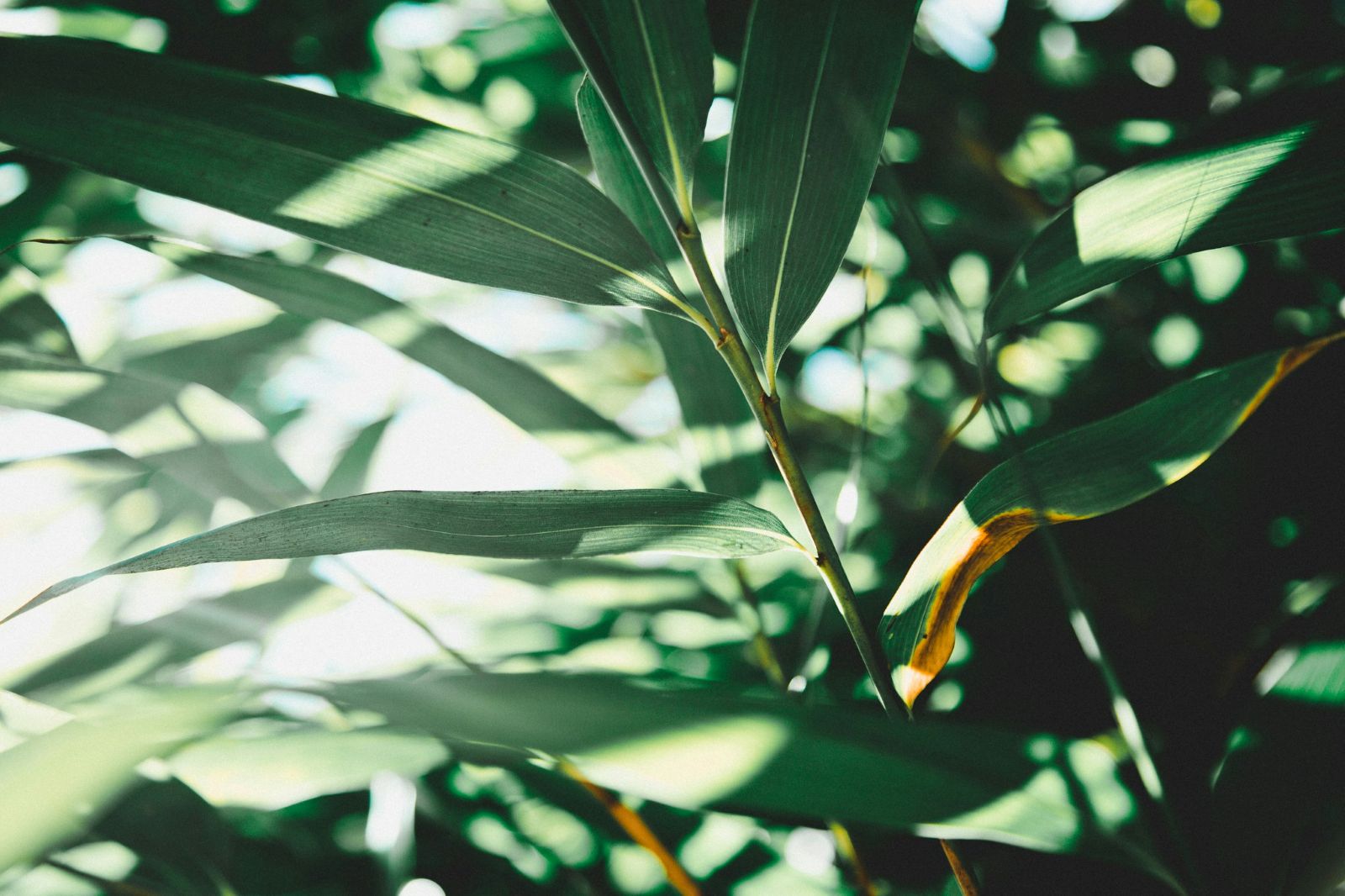
This plant isn’t an “it.” Photo by Samuel Austin on Unsplash
Wall Kimmerer flips this object/human perspective on its head when she writes:
“Imagine seeing your grandmother standing at the stove in her apron and then saying of her, ‘Look, it is making soup. It has gray hair.’ We might snicker at such a mistake, but we also recoil from it. In English, we never refer to a member of our family or indeed to any person, as it. That would be a profound act of disrespect. It robs a person of selfhood and kinship, reducing a person to a mere thing. So it is that in Potawatomi and most other indigenous languages, we use the same words to address the living world as we use for our family. Because they are our family.”
They are our family. They are our siblings, even if we struggle to recognize them as such. We are in relationship with all of them, whether we want to admit that or not. My spiritual teacher says, “Why should the love and affection of developed human minds be restricted to human beings only? Why should it not include all living beings, including plant life?” Why indeed? Because there’s a sort of speciesism occurring where only certain species are deemed worthy and valuable to the detriment to all the rest.
Later, my teacher says, “[W]e never realized – and still do not – that this wanton destruction of the animal and plant worlds will be of no benefit to human beings. Rather, it will be a great loss for human society.”
He calls this philosophy neohumanism because it includes love, care, and respect not only for humanity but for every living being, whether animate or inanimate. Wall Kimmerer calls this philosophy indigenous wisdom, or perhaps animism. And Buber calls it the I/thou approach. Whatever you call it, I see the benefit. Humans are not separate, alone, or isolated from other species. We are not apart from nature; we are nature itself. Whatever we need to do to feel that is fine, just as long as we feel it.
I dream of a world where we recognize non-humans are not objects, even if the English language doesn’t recognize that. A world where we approach everything we interact with – whether animate or inanimate – as a being worthy of care, attention, respect, and consideration. A world where we embrace egalitarianism of all species rather than hierarchy.
Another world is not only possible, it’s probable.

