The Power of Poetry
You may already know this, but AI safety researcher Mrinank Sharma resigned recently. That’s not really news in and of itself – people leave their positions all the time. No, the newsworthy part is that he left Anthropic, best known for its chatbot Claude, to study, drumroll please: poetry. Yes, poetry.
The context is what makes the whole thing fascinating. My friend and narrative astrologer Ada Pembroke sums it up nicely: “[S]omeone who spent years trying to build AI safety guardrails has decided the answer isn’t better guardrails. The answer is wisdom. And he’s going to look for wisdom the way humans always have: through art, through language that means more than one thing, through the practice of courageous speech.”
To be honest with you, I struggle with poetry. I’m a highly literal person and I want people to say what they mean and mean what they say. But Ada suggests poetry is powerful precisely because it’s not that (mostly). Poetry collapses multiple symbols all into one. It encourages us to dive deeper, to look again, and that’s what AI cannot do because it, too, is very literal. And per her second point, poetry can be courageous.
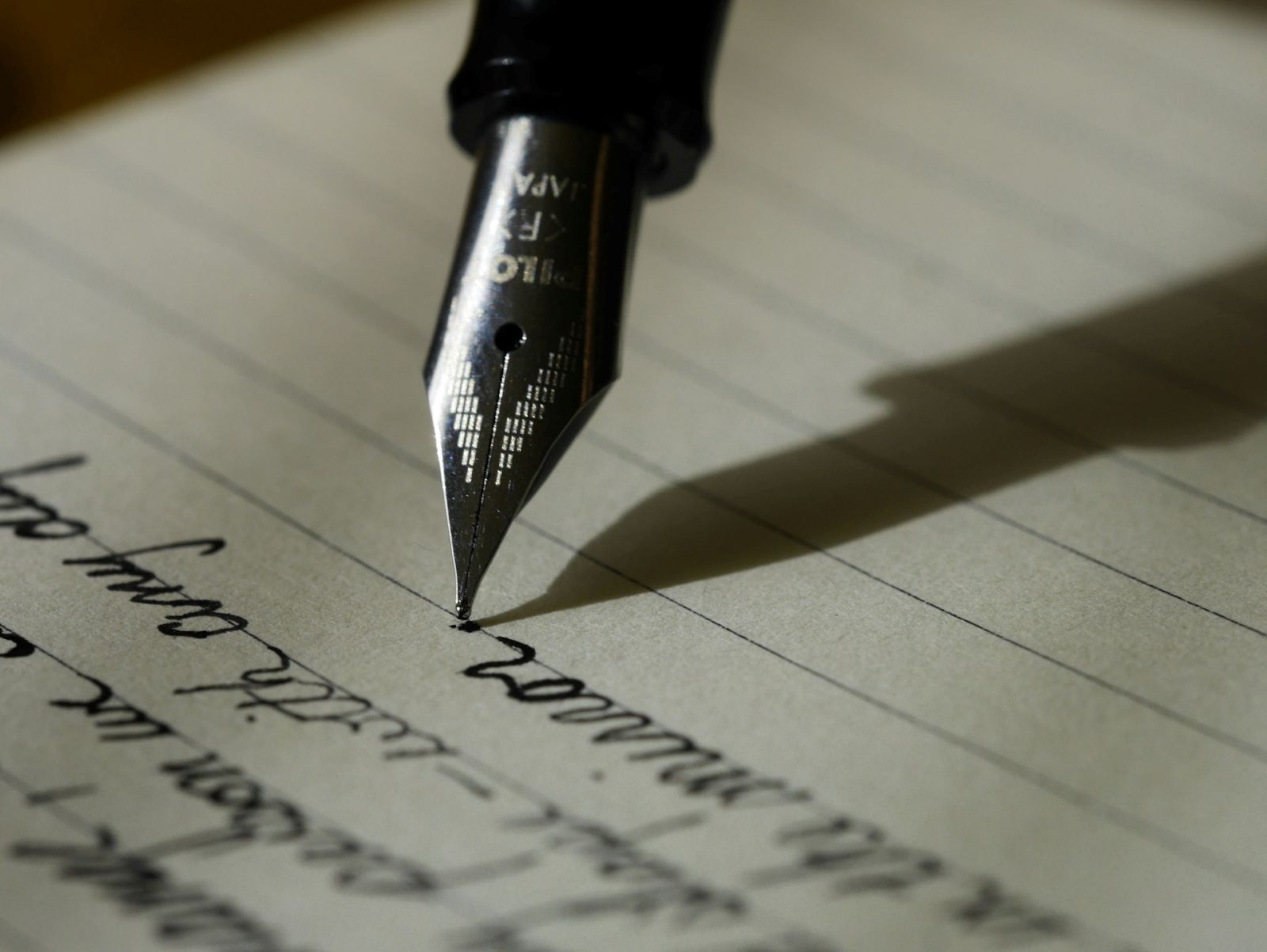
The pen is still mighty! Photo by Aaron Burden on Unsplash
I’ve known for ages that journalists are frequently jailed for their writing. Reporting the truth can be dangerous in a time when governments want to function on lies. What permeated my brain less is that poets are also jailed. In 2024, 375 writers were jailed in connection with their speech, according to PEN America’s Freedom to Write Index, and 67 of them were poets. In Myanmar, poets led protests with poetry readings to support civil resistance following the military’s February 2021 coup; several were arrested and detained.
In Iran, poets who posted and recited poetry on social media were arrested by authorities looking to silence support for the Woman, Life, Freedom movement. In a few places, poets are jailed not for months but for years. As PEN America puts it: “Authoritarian leaders target poets because their words – filled with lyricism, story, and feeling – can expose the cracks of oppression in daily life.”
My spiritual teacher encourages people to make art not for art’s sake but for service and blessedness, meaning, to spur their love of the divine. He says artists are pioneers and can lead society forward. Literature in particular is “that which moves together with the society, which leads society towards true fulfillment and welfare by providing the inspiration for service,” he says. “People seek deliverance from the whirlpools of darkness; they aspire to illuminate their lives and minds with ever-new light. In all their actions, in all their feelings, there is an inherent tendency to move forward; therefore, if at all they are to be offered something, the creator of art cannot remain idle or inert.”
What my spiritual teacher is pointing to is the power of art. It’s not merely commerce, a way to make a quick buck, but a tool for good or evil. Art influences people, whether they want to admit it or not, and in this age of AI slop, original, human-created art that speaks to the times we live in is potent.
I dream of a world where we remember that art still matters. A world where we understand there can be more to art than just amusing people or trying to capitalize on a trend. A world where we remember art and literature can be a tool of service and inspiration. A world where we recognize the power of art and use it accordingly.
Another world is not only possible, it’s probable.

