Something that’s on my mind a lot is the desire for one-and-done. I want the magic pill, the silver bullet, the “do this once and everything is fixed” solution. I see this in myself but I also see it in the rhetoric we use when talking about the world writ large. “Save the world,” we say, as if the planet is in need of rescuing. That’s what “saving” means, by the way, to rescue from impending danger. Here’s the thing, though: When in human history have we as a species not been in impending danger? Seriously, when?
Our ancestors were in danger on a smaller scale but no less threatening – danger from food scarcity, warring tribes, diseases, and more. As we edged toward globalization, the threats became even larger and more climactic, literally. We still have danger from food scarcity, war, and diseases, but now we also have danger from things like extreme weather. And as we’re seeing, we’re all connected. A storm in the northeast can affect people in the southwest.
We talk about saving the world as if we haven’t had to confront these issues a million times in the past. As if we haven’t already had to deal with government-sanctioned murder. As if we haven’t already faced extreme exploitation or inequality. As if we haven’t already dealt with harsh weather conditions. The circumstances, the specifics, they are all different, yes, absolutely. But the heart? The themes? Practically timeless.

Maybe it’s more about relationality. Photo by Alin Andersen on Unsplash
So what I keep wondering is, can the world be saved? Is there a silver bullet that fixes everything? Very clearly, the answer is “no.” When we talk about “saving the world,” we couch it not only as a one-time fix, but we also subtly create this individualist burden. Doing so makes “saving the world” your personal responsibility. But it’s not. We are in relationship with this planet and each other. No one person can “save” the world and nor should they.
Something my spiritual teacher talks about frequently is “coordinated cooperation.” It’s when cooperation is between free human beings, each with equal rights, mutual respect for each other, and they are working for the welfare of the other. What we see more frequently is subordinated cooperation, which is the traditional power structure whereby power is top-down. It’s someone, or a group of someones, imposing their will. But it never works.
To quote my spiritual teacher, “Only the cooperative system can ensure the healthy, integrated progress of humanity, and establish complete and everlasting unity among the human race. People should work to enjoy sweeter fruits by establishing the cooperative system.”
A cooperative system cannot exist if one group is considered inferior to another. Nor can coordinated cooperation exist if it’s imposed upon the group. I believe the same is true with the planet as a whole. We humans think we know what the planet needs, but how can we possibly know if we don’t have a relationship with it yet? That’s like us diverting a river and then being surprised when there are unintended consequences.
I don’t think the world needs to be “saved,” I think it, and we, need empowerment via mutuality and relationality. The planet as a whole needs tending, serving, stewarding, not domineering. Not imposing power over, but power with as an equal player, an active participant. And part of being an active participant means recognizing there is no “one-and-done.” There is no magic pill or silver bullet. If we want to serve the world, if we want to shepherd it into a more harmonious place, we do that over and over again, one day at a time.
I dream of a world where we recognize we aren’t saviors, we’re stewards. A world where we recognize no one person has the power to solve everything all at once. A world where instead of creating power over, we create power with. A world where we understand if we really want to support people and the planet, it requires an ongoing, mutual relationship, not a white knight.
Another world is not only possible, it’s probable.
I learned something fascinating recently: The idea male and female wolves compete to become dominant within packs is inaccurate. This competition only occurs in zoos and not in the wild. In 1944, Rudolph Shenkel, a biologist, first observed this behavior of vying for dominance in wolves at a German zoo but in the subsequent years, David Mech studied wolves in the artic and found wolf packs are families. In other words, the “alpha male” is the dad and the “alpha female” is the mom. The rest of the pack follows their lead because they’re the offspring, not because they fought a battle and lost.
While I find this little tidbit interesting, what intrigues me more is why the idea of the alpha male and female continues to percolate in our society. I think it’s because we want to use nature as an excuse for why we do the things we do and in a patriarchal, capitalistic society, an alpha is paramount.
In a patriarchal society, men and so-called masculine traits are at the top of the hierarchy. Under patriarchy, we value strength, power, and force. The strongest, most powerful are lauded and anyone or anything considered weak and feeble is disparaged. Men are at the top of the ladder and women are at the bottom, but it’s a continuum so while men who are perceived as more feminine are looked down upon, they are still above women in the power structure.
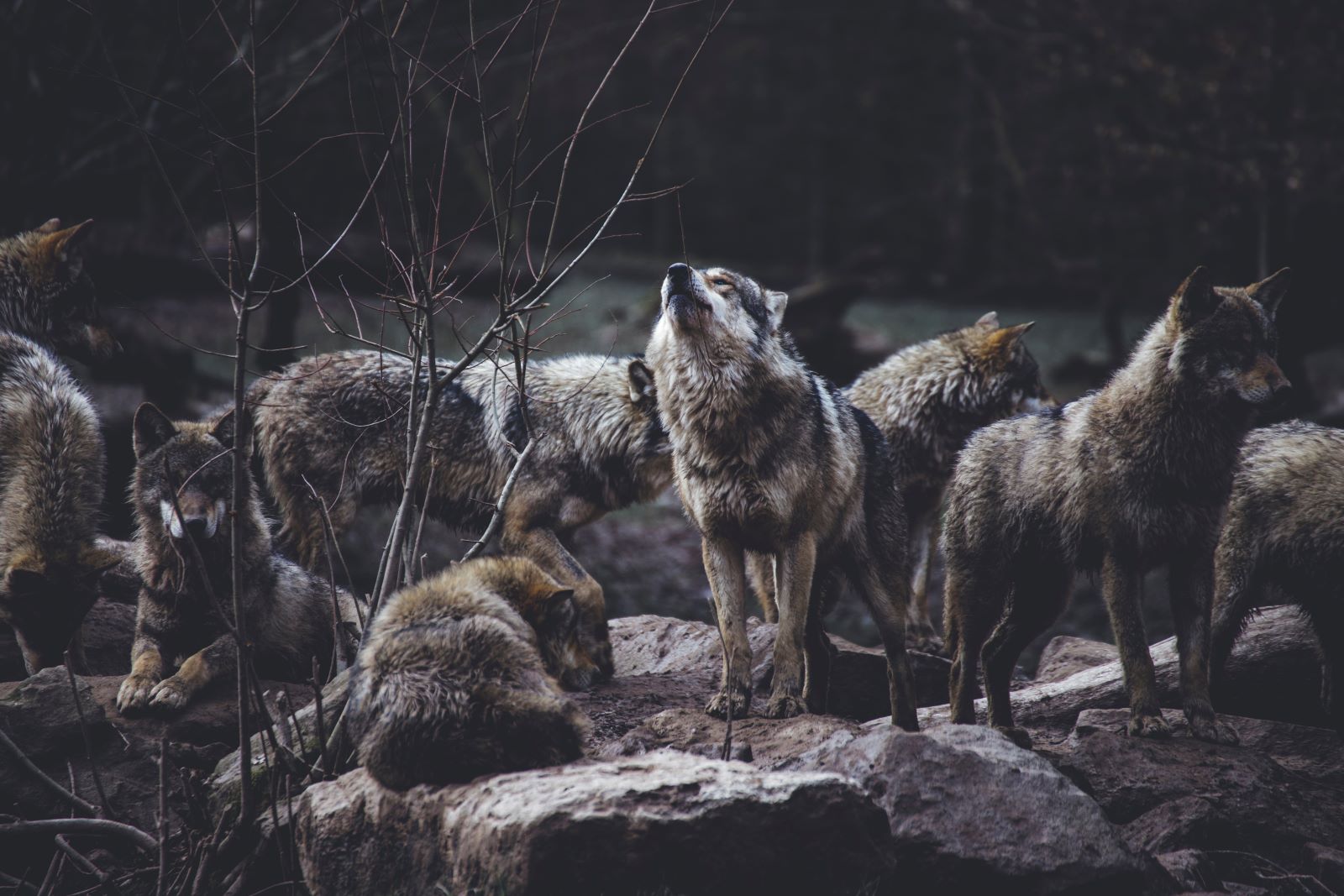
No alphas. Only parents. Photo by Thomas Bonometti on Unsplash
Through that lens, of course the idea of an alpha male is appealing because an alpha male is the epitome of what we praise under patriarchy. Capitalism feeds into the idea of the alpha because under capitalism, there’s the idea only one person can be in charge. Capitalism operates under a scarcity model – if there’s more for you, there’s less for me. That applies to not only money but power, resources, you name it.
We try to point to nature to say, “See? What we’re doing is only natural,” but over and over again, nature shows us collaboration is the name of the game. For instance, neighboring trees help each other through their root systems either directly, by intertwining their roots, or indirectly, by growing fungal networks around the roots that serve as a sort of extended nervous system. German forester Peter Wohlleben said, “If every tree were looking out only for itself, then quite a few of them would never reach old age.”
Also, bonobo females make lasting friendships and don’t tolerate aggressive males; the friendliest bonobos are always the ones with the most offspring. Ants and bees work together to make colonies and hives. I could keep going because examples of collaboration are endless. Instead of saying what we humans are doing is natural, it’s time to recognize we’re the anomaly. If we want to thrive as a species, we must cooperate with one another.
To quote my spiritual teacher, “Only the cooperative system can ensure the healthy, integrated progress of humanity, and establish complete and everlasting unity among the human race. People should work to enjoy sweeter fruits by establishing the cooperative system.”
Let’s enjoy those sweet fruits and start by retiring the mode of living like an alpha. Instead, let’s continue to take our cues from wolves and live like a universal family.
I dream of a world where we recognize the idea of an alpha male and an alpha female has outlived its usefulness. A world where we understand nature shows us over and over again that to survive and thrive we’re better off cooperating with one another. A world where we continue cooperating because we care about the progress of ourselves and the rest of humanity.
Another world is not only possible, it’s probable.
Something that’s been on my mind a lot, as I’m sure it has for many others, is the situation in Afghanistan. I’m watching in horror as the Taliban is taking over once more and all the progress from the past 20 years is disintegrating. How does this happen? Why hasn’t the narrative we’ve been sold – that the U.S. brings democracy and freedom to other countries – work? (I know we invaded Afghanistan in response to terrorism, but we also tried to establish a Western-style democracy.) It doesn’t work because there’s a very specific dynamic at play.
When a foreign country invades to supposedly make things better, they are often viewed as a bully throwing their weight around. They become resented and are seen as meddling in affairs they know nothing about. And if the foreign power does set up projects and organizations to aid the local denizens, those projects and organizations often crumble when the foreign power leaves. Why? Because the foreign country is enacting subordinated cooperation instead of coordinated cooperation.
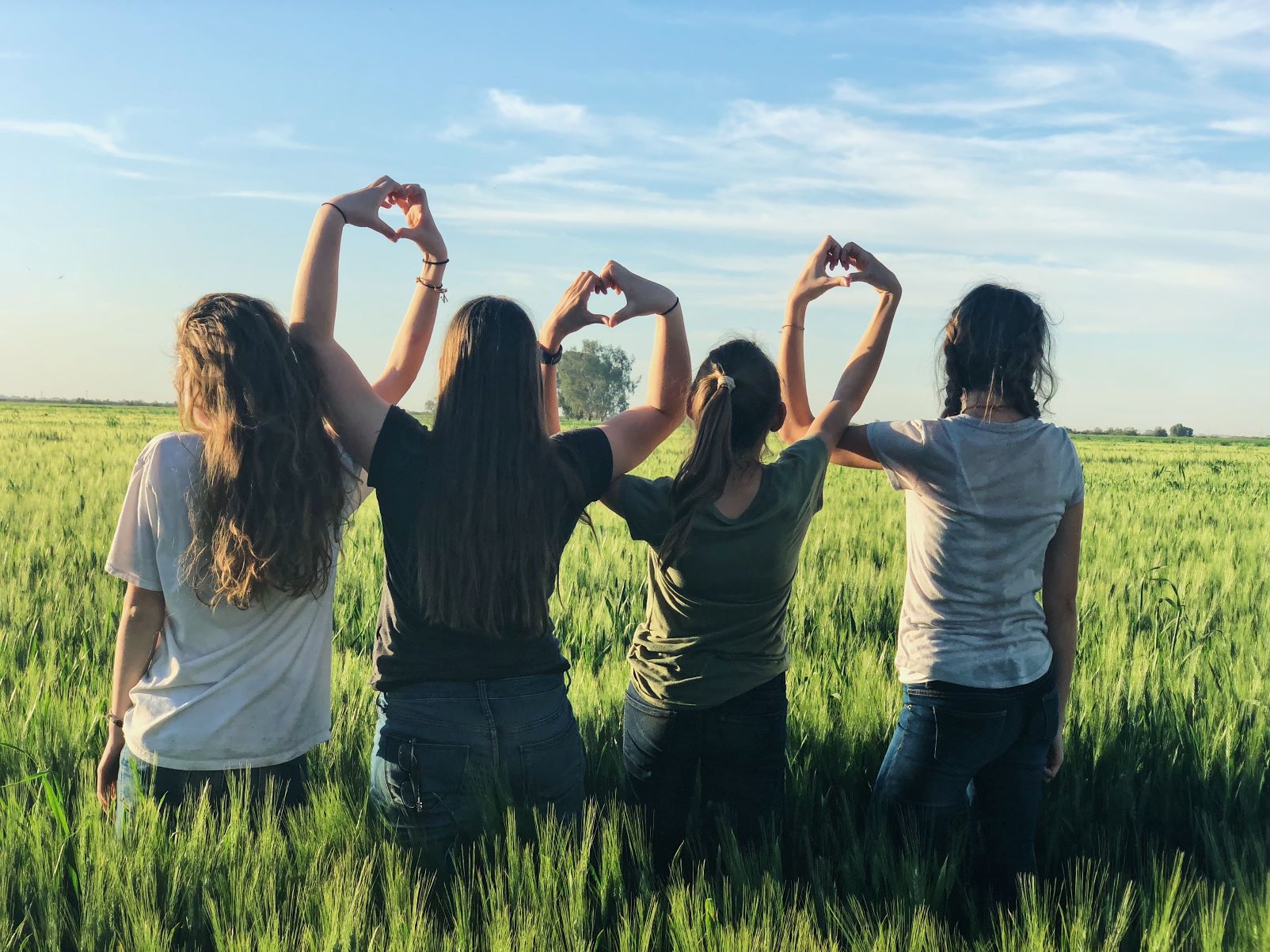
Coordinated cooperation all the way. Photo by Melissa Askew on Unsplash
Where people do something individually or collectively, but keep themselves under other people’s supervision, that’s subordinated cooperation. It’s the traditional power structure we see, well, pretty much everywhere. It’s the traditional work situation where a boss issues commands from on high and the employees follow those commands. The employees have less agency or power and aren’t as invested in their work because they don’t have a say.
In the case of Afghanistan, our military trained and equipped nearly 300,000 people to take over when we left. It was justification for our withdrawal. What happened when the U.S. withdrew? That army dwindled to only about 500 people.
U.S. News and World Report stated the local forces “simply put down their weapons, defected to the Taliban willingly or because their families faced threats, or succumbed to the other forms of bribery and waste that American inspectors general have been publicly documenting for at least a decade.”
In the same article, Army Gen. Mark Milley is quoted as saying, “They had the training, the size, the capability to defend their country. This comes down to an issue of will and leadership.” His quote is very revealing – he said the issue came down to “will” and “leadership.” He’s a military man looking for a military solution. The military is all about subordinated cooperation and not coordinated cooperation so of course as soon as the head honchos left the army fell apart.
Imposing ideas and dictates upon another group doesn’t work. What does work is coordinated cooperation. It’s when cooperation is between free human beings, each with equal rights, mutual respect for each other, and they are working for the welfare of the other.
To quote my spiritual teacher, “Only the cooperative system can ensure the healthy, integrated progress of humanity, and establish complete and everlasting unity among the human race. People should work to enjoy sweeter fruits by establishing the cooperative system.”
A cooperative system cannot exist if one group is considered inferior to another. Nor can coordinated cooperation exist if it’s imposed upon the group. They have to believe themselves equal, to demand it, and not take anything else than they deserve. Local culture and customs must be respected and the local people must be the ones to initiate change – not someone who is considered an outsider. The situation in Afghanistan is a clear example of that.
I dream of a world where we employ coordinated cooperation and not subordinated cooperation. A world where we respect local customs and cultures while also empowering the disempowered. A world where we support change not in the form of imposition but instead in the form of nurturing.
Another world is not only possible, it’s probable.