My dad told me about a TV show where people try to be the last person to survive in the woods on their own for a chance at winning $500,000. The premise is interesting because it touches on the themes of competition, human versus nature, and also resourcefulness. I get the appeal. But what I don’t get is the lengths people will go to in order to win.
One contestant swam into a frozen lake in an attempt to catch some fish knowing she’d get hypothermia. She explicitly told the camera she knew that would happen. The woman could have tapped out of the show at any time and said, “You know what? The $500,000 isn’t worth it. Take me to the grocery store,” but she didn’t. She literally risked her life all for what? Money. Money that frankly won’t last very long considering the rate of inflation.
Desperation is real and it pushes people to do things they otherwise wouldn’t. But this woman wasn’t a member of the Donner party, starving to death in the middle of winter. She was in a situation of contrived and self-inflicted desperation. I don’t fault this woman; I don’t know her or her story. She made her choice freely. No, instead what I fault is the toxic worldview pervading our society that lauds this sort of decision: materialism.
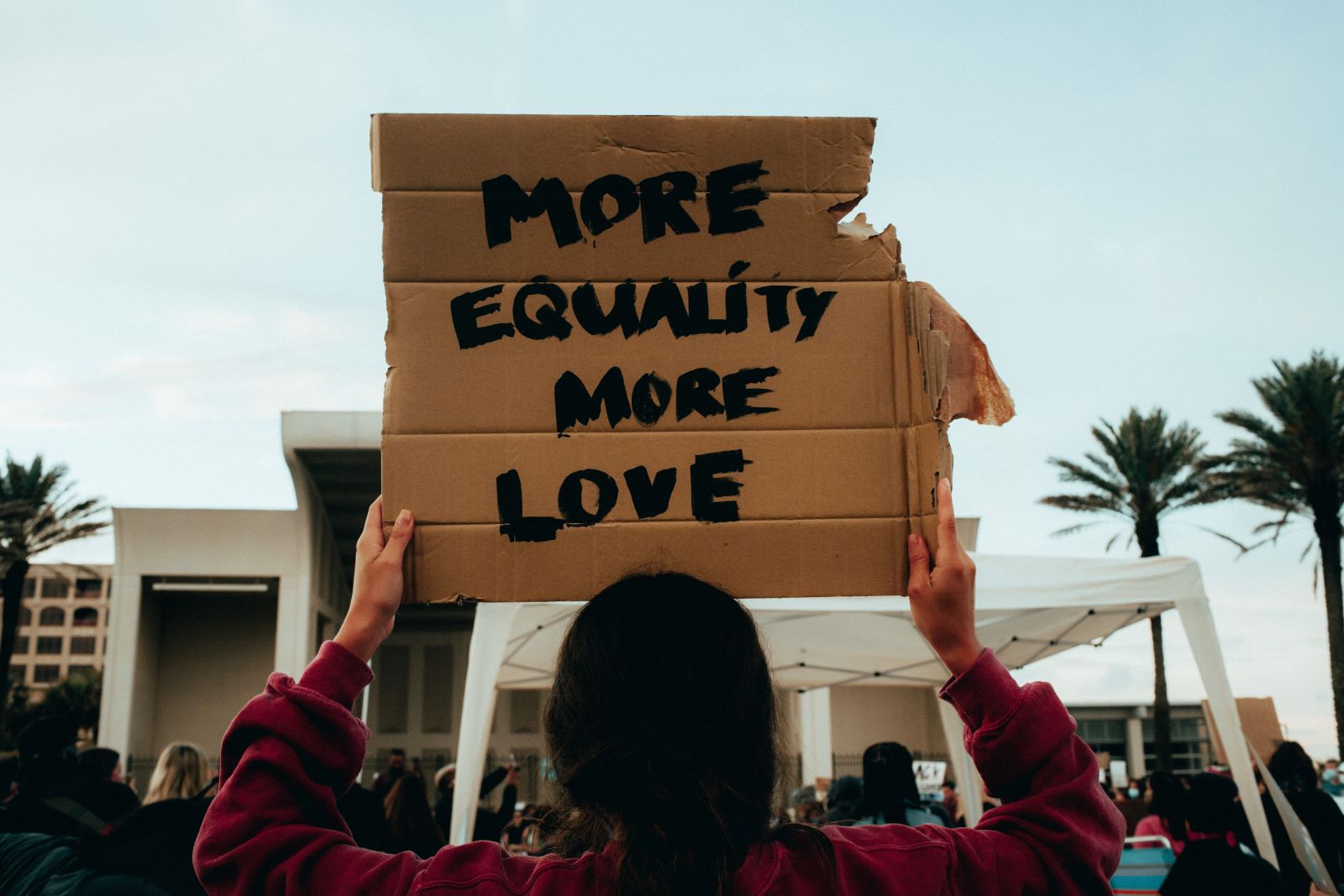
I agree! More equality, more love! Photo by Cody Pulliam on Unsplash
My favorite summary of materialism comes from a friend who says, “Under materialism, only matter matters.” Exactly. In a materialistic society, money and possessions are more important than love, community, and life. Not everyone is willing to become hypothermic for cash, but over and over again, we demonstrate human life isn’t worth more than money in indirect ways: child labor, exploitative working conditions, polluting the environment, etc. We are poisoning and killing one another for something ephemeral.
I’m not here to say money is unimportant because that’s a lie. It is important, but it’s not the only thing that matters. The worldview I use stems from tantra and my friend sums it up by saying, “Under tantra, everything matters.” What he means is matter matters. People matter. The environment matters. Spirituality matters. Under tantra, you take it all into account. Money is not the bottom line every time.
We take it for granted that materialism is the only way to operate in the world but it’s not. It’s a belief system and belief systems can change. A little religious inspiration for you that’s appropriate considering this time of year: Hanukkah isn’t really a story about oil lasting for eight days. It’s the celebration of people unifying against oppression and winning.
A quick recap: Judah and the Maccabees revolted against Syrian King Antiochus in 160 BCE. He enacted a series of harsh decrees against the Jews, including forcing them to give so much of their crops to the Syrian ruling class, the Jews had trouble feeding their families. Jewish worship was forbidden; scrolls were confiscated and burned. Sabbath and dietary laws were prohibited under the penalty of death. This small group of Jewish rebels fought against an army of thousands of men and won.
My rabbi, Michael Lerner, says, “Hanukkah is not just about having a response to the consumption craze around Christmas, it is about affirming a different worldview, a hopeful worldview. [It’s] about replacing cultures of domination with a culture of love and justice.”
We already have examples of worldviews toppling. We know it can be done because it’s been done before. We don’t need to keep operating as if materialism is the only game in town because it’s not. There’s another way to live, a better way. One in which we recognize the importance of bodies, minds, and spirits.
I dream of a world where we topple materialism. A world where we say, “No, materials are not the most important thing in existence.” A world where we recognize the existential value of all life forms. A world where we replace a culture of domination with one of love and justice.
Another world is not only possible, it’s probable.
I’m working on a novel about a 32-year-old woman who is deeply insecure but tries to mask it with false bravado. She second-guesses every move but tries to hype herself up by saying, “Go me!” and “I got this,” nearly every chance she gets. When I show small snippets of the novel to a writing group consisting primarily of women around my age, the feedback is positive. They’ve told me it’s highly relatable, either for themselves or because it reminds them of their friends. One woman commented this is the sort of book she’d stay up late reading.
However, when I show small snippets of the novel to a writing group consisting primarily of women around 30 years older than me, the feedback is negative. They compliment the writing itself and praise my strong voice, but hate the character. They say she’s self-indulgent and unlikeable. Same character, different audience.
The novel is very much a work in progress. I haven’t even completed the first draft so I’ll change 10,000 things from now and when I deem it ready for the world so who knows how people will respond at that point? Yet, regardless of the changes I make, the experience reminds me you can’t please everyone all the time and it’s not worth it to try. What strikes a chord with one person will be disharmonious to another. Also, depending on the age and stage of life, the same person will no longer like the thing they once enjoyed!
Likes come and go. Photo by George Pagan III on Unsplash
This happened to me on Saturday night. I went to San Francisco for a play and walked just two blocks from where I used to live near Union Square. It’s a neighborhood filled with hustle and bustle. There are about a million people milling about. Cars are honking, people are chatting, and restaurants are buzzing. When I was 23, I loved Union Square. I wanted to be in the thick of things. My feeling was, “Take me to where the action is!” But now at 38, I don’t want to be where the action is. I want the antithesis of Union Square: a house with a yard on a quiet street.
A friend asked me if there’s anything I miss about living there and I do. I miss the public transportation. I could catch numerous buses and multiple train lines easily whereas now my options are more limited. I miss that part but nothing else. I have zero desire to live in Union Square again but for me at 23, it was a dream come true. People change and their tastes change. Because of that, it’s impossible to please everyone. In marketing, they say if you try to appeal to everyone, you’ll appeal to no one. That’s because your product will become so diluted and bland, no one will be interested.
This principle of “you can’t please everyone” doesn’t only apply to art and commerce. It also applies to life. At this time of year, people are pulled in many different directions. They feel pressured to go to all of the holiday parties, visit their families for 10 days, buy gifts for everyone on their list. They get stretched too thin because they’re worried about displeasing their boss, their family, their friends. But here’s the thing: Someone will always be displeased. It’s just not possible to be everything to everyone and if you try, you’ll wind up burned out and resentful.
The more I recognize someone, or rather many someones, won’t like me, my art, my blog, my behavior, or heck, the way I style my hair, the better off I am because it’s inevitable. It’s not bad or wrong, it’s just a fact of life. It’s probably for this reason you’ve seen the overused quote wrongly attributed to Oscar Wilde that says, “Be yourself. Everyone else is already taken.”
I dream of a world where we remember people like different things. A world where we understand not only do other people have varied tastes, but our tastes change too. A world where we recognize it’s more important to take care of ourselves than to engage in people pleasing. A world where we remember we won’t be able to please everyone.
Another world is not only possible, it’s probable.
On Saturday I sat in the backseat of a car with a moon roof. I stared up at the sky and noticed a rainbow hidden in the clouds. I lowered my sunglasses because usually, that helps me see colors better but, in this case, I was surprised. Leaving my sunglasses on helped me more clearly see the rainbow. It blew my mind a little, to be honest.
We talk a lot about darkness and associate it with bad or evil things. Darkness is something to be scared of, it’s dangerous. But is that always true? Seeing this rainbow through my sunglasses reminded me sometimes darkness is illuminating. That happened for me this week not only with a rainbow but also with a better understanding of trauma.
When I first heard the news about antisemitic banners hanging over an LA freeway, my response was, “Where will I run?” That’s not rational or reasonable. No one was chasing me! Furthermore, I’ve never directly experienced antisemitism – no one has called me names for wearing a Jewish star or bullied me online. So where did this response come from? It’s a bodily memory from my ancestors.
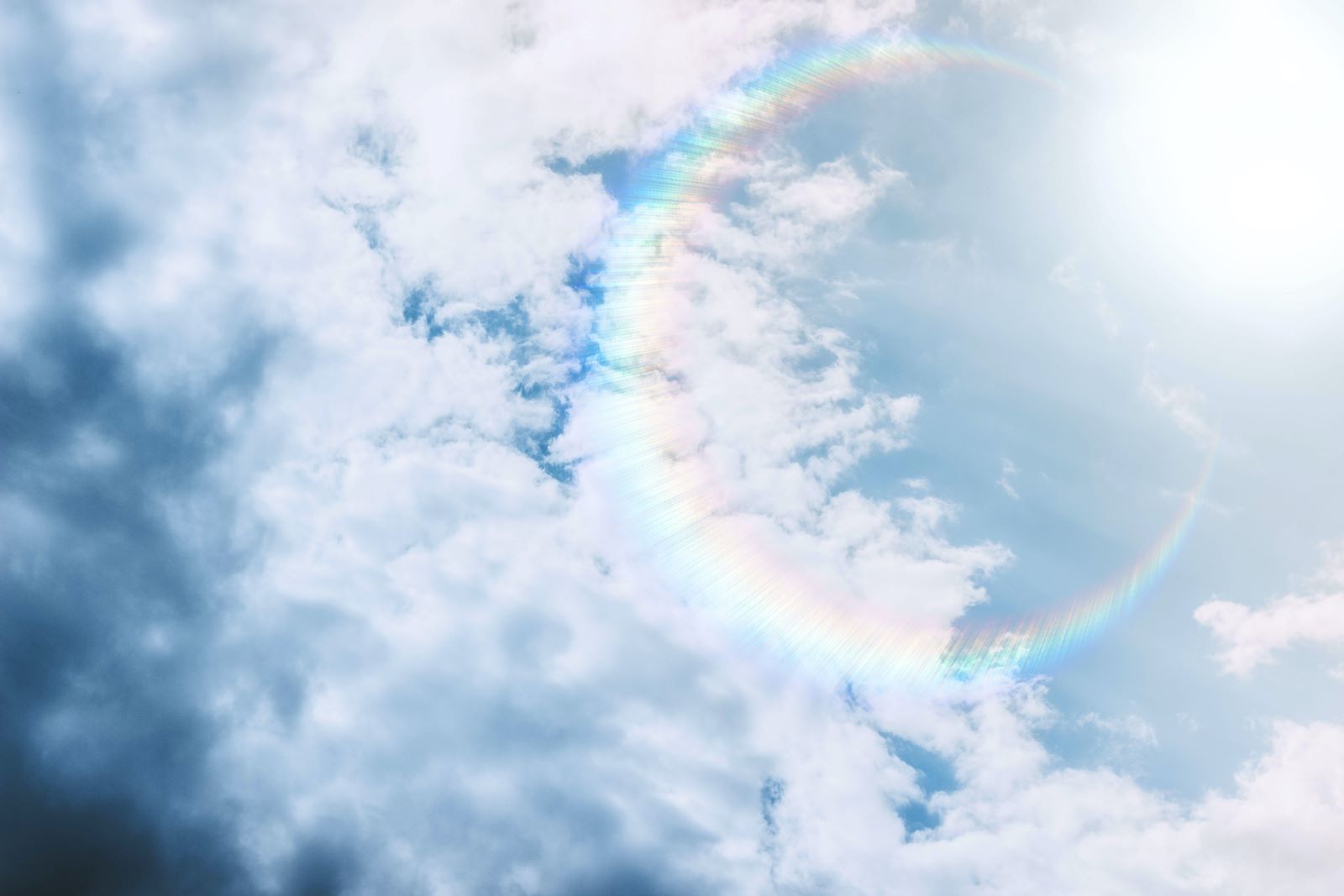
The rainbow I saw wasn’t nearly this defined but you get an idea of what I saw. Photo by Mathias Reding on Unsplash
My maternal ancestors lived in Eastern Europe and even before the Holocaust, it wasn’t free of antisemitism. I don’t know much about them, but I do know about my grandparents – both of whom were Holocaust survivors. They both had horrific experiences, but I think my, “Where will I run?” response comes from my grandmother.
During World War II, she dug her way through the ground floor of a Lithuanian ghetto and escaped via a sewer line into the woods. In other words, she ran. To my surprise, when I encounter antisemitism in places I don’t expect, like an LA freeway, that same response shows up in me. My “lizard brain” gets activated. We all have this brain, it’s our limbic system, and it doesn’t respond to logic or reason. The limbic system scans all sensory inputs and responds in a fraction of a second by letting them into the cortex, the thinking part of the brain, or initiating the fight, flight, freeze, or fawn response.
As trauma-therapist Resmaa Menakem writes in his book My Grandmother’s Hands, “This mechanism allows our lizard brain to override our thinking brain whenever it senses real or imagined danger. It blocks any information from reaching our thinking brain until after it has sent a message to fight, flee, or freeze.”
In other words, you can’t reason with your lizard brain. It just responds. What I hadn’t realized, and what I think many people also don’t understand, is that when it comes to big issues, the “isms” and “phobias” we’re facing right now, you can’t reason those away. It might work with some people to explain why racism is harmful to everybody, including white people, but if a white-bodied person feels fear or anger in their nervous system when they encounter a melanated body, logic goes out the window and racism continues.
Shadows can offer a new perspective sometimes. Photo by Tim Mossholder on Unsplash
Similarly, emotional appeals will also only take you so far. Just after George Floyd’s murder, there was a surge of interest in antiracism. Emotions ran high and people purchased books and enrolled in classes more than they had before. But now, those classes and courses aren’t garnering as much interest or attention because emotion faded. But the body remembers. Menakem argues, “If we are to survive as a country, it is inside our bodies where this conflict will need to be resolved.”
After this week and experiencing my own version of alienation and othering, I agree. I can’t reason with people why antisemitic tropes are malarkey. I can’t emotionally convey why staying silent in the face of antisemitism is terrifying for me as a Jewish person. If you don’t get it, I can’t make you get it. What I can do though, is heal my own trauma.
When we do so we make room for growth in our nervous systems and that spreads. It’s like emotional contagion, but instead of emotion, something even more powerful. This isn’t a task relegated to oppressed groups, by the way. Every group has its own brand of trauma including white people. Responding with rage and aggression in the presence of an oppressed group is evidence of that.
Darkness revealed a lot to me this week. And not only a rainbow.
I dream of a world where we recognize logic and emotion only takes us so far. A world where we understand the power of trauma and create more space and peace within our nervous systems. A world where we confront our shadow to make the world a better place for ourselves and others. A world where we understand not only is light illuminating, so is the dark.
Another world is not only possible, it’s probable.
I keep thinking about the cycle of luck. If you take a snapshot of an event, it might initially seem like bad luck. But if you widen your lens, so to speak, that unlucky event can become lucky.
There’s a story about a Chinese farmer who used a stallion to till his fields. One day the stallion escaped into the hills. The farmer’s neighbors lamented his bad luck but he replied, “Bad luck? Good luck? Who knows?” A week later, the stallion returned with a herd of horses from the hills. The neighbors rejoiced, congratulating the farmer on his good luck. He replied, “Good luck? Bad luck? Who knows?” The farmer’s son attempted to ride one of the wild horses but he fell off and broke his leg. Everyone exclaimed, “Oh no! What bad luck!” The farmer said, “Bad luck? Good luck? Who knows?”
Some weeks later, an army marched into the village and conscripted every able-bodied young man they found. Seeing the farmer’s son with his broken leg, they exempted him. Was it good luck or bad luck? Who knows!
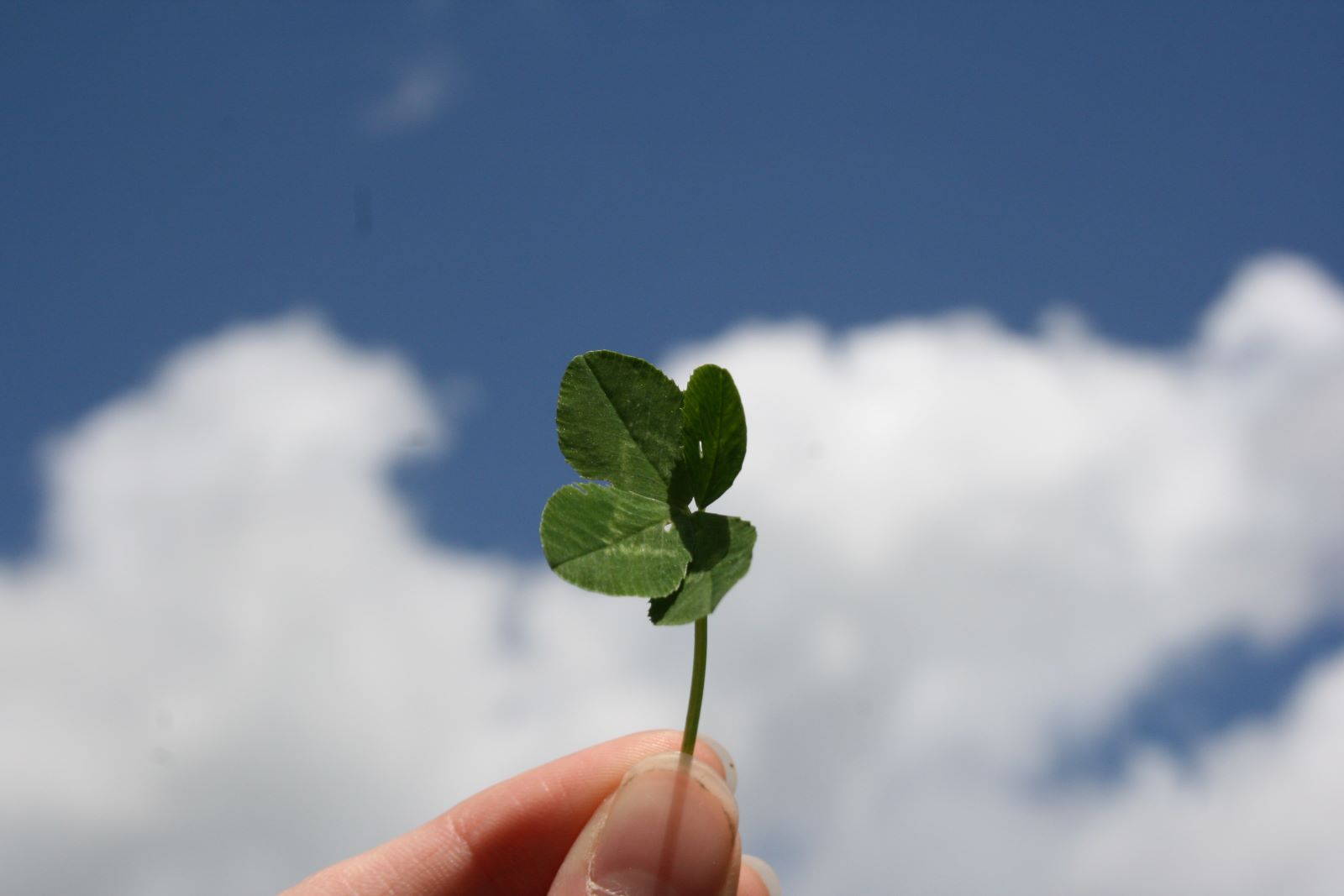
Lucky, unlucky, who knows? Photo by Barbara Krysztofiak on Unsplash
I’m experiencing a bit of this bad luck-good luck cycle myself. About a year ago, I was in a car accident. I didn’t need to go to the hospital so it wasn’t major in that sense, but I was in acute pain for months, and then when the swelling in my neck, back, and shoulders subsided I needed physical therapy to regain range of motion and help build strength. I wouldn’t call being in a car accident “lucky.” I don’t think anyone would. But as a result of the car accident, I reached a personal injury settlement with the driver’s insurance company for thousands of dollars. With that money I was able to wipe out some of my debt so was the car accident a good thing?
At this snapshot in time, something good came from the bad, but what will I say another year from now? Unclear, but that’s my point. Life is filled with ceaseless ups and downs. We want to freeze time, to only experience “good” things but “good” things can turn into “bad” things. That dream job you landed? It’s so stressful it starts to affect your health and your relationships. The beautiful home you purchased? Infested with termites. Nothing is static, nothing stays the same, including luck.
According to my spiritual philosophy, the Sanskrit word for the universe is jagat, and jagat comes from the root verb meaning “to move.” My spiritual teacher says, “Here in the universe, nothing is stationary, nothing is fixed. Everything moves; that’s why this universe is called jagat. Movement is its dharma; movement is its innate characteristic.”
Nothing is permanent. Nothing lasts forever. Not good luck. Not bad luck. When I remember that, bad luck becomes easier to bear and good luck becomes more precious.
I dream of a world where we understand bad luck can turn into good luck and good luck can turn into bad luck. A world where we recognize nothing is stationary or fixed, including our circumstances. A world where we hold some perspective as the wheel of fortune keeps turning.
Another world is not only possible, it’s probable.
October is a strange month in the Bay Area. I know in many parts of the U.S. the temperature is dipping, leaves are changing color, and people are eating soup for dinner. But in the Bay Area, October is a liminal month, straddling the line between summer and fall. Earlier this week I wore a t-shirt because the weather was so warm. Today I’m wearing a sweater because it’s foggy and slightly cold. However, later this month the temperature is expected to rise to the high 80s.
The temperature may designate summer but the sunlight spells fall. The light is changing, it’s getting darker earlier. Summer is gone and fall is coming, in that arena. However, because of the temperature, it feels like we’re not firmly in one season or the other. We’re in limbo. I don’t particularly enjoy limbo, whether that’s a season or a situation. I want to cross a threshold but how often does that happen? Isn’t most of life instead a transition? Aren’t we perpetually waiting for one thing to end and another to begin?
What I’m recognizing is the desire to be in one or the other doesn’t serve me. I’m not letting myself enjoy the current moment because I’m wishing things were different. This is akin to the “arrival fantasy.” The idea there will be a day when I have “arrived” in life. Said another way, it’s the “I’ll be happy when” myth. For instance, “I’ll be happy when it’s fall. I’ll be happy when I’m married. I’ll be happy when I get the promotion.” The “happy when” syndrome can last all the way until your deathbed.

This picture will make sense as you keep reading. Photo by Michael Pfister on Unsplash
Clinical psychologist Dr. Natalia Peart says, “For decades, we’ve always thought that once we achieve success in our careers, then we’re supposed to get happy. And that once we get happy, we’re going to be fulfilled. That was the old path. So we’d ignore signs of burnout or the fact that our lives were so narrow because the assumption was that there would still be a reward of happiness. But that reward was always in the future. Happiness is now and being able to live in this moment, even in the harried, busy life that we live. You want to get up every day and know that there’s some level of meaning in the now – not two months or two years from now.”
One way we derive meaning in the now is by contending with death and recognizing even death doesn’t portend finality, but rather another beginning. This is well-captured in the story of the Skeleton Woman. Click the link for an animated version of the story, but the abbreviated version is this: A fisherman hooks a skeleton woman and not realizing she is caught on his line, tries to run from her. He bumps along the land with the woman on his tail and dives into his hovel thinking he’s safe. Alas, it is not so.
She is inside his home, limbs akimbo. In the candlelight, he takes pity on her, untangling her from his line, righting her limbs. Then he falls asleep and a tear leaks from the corner of his eye, which the Skeleton Woman drinks up thirstily. While he’s still sleeping, she pulls out his heart, holds it in her hand, and flesh is drummed back onto her bones. She becomes a human again. She returns his heart and then falls asleep next to him, and “that is how they awakened, wrapped one around the other, tangled from their night, in another way now, a good and lasting way.”
In order for us to thrive in relationships, our jobs, our everything, we must reckon with Lady Death, which is what the Skeleton Woman represents. We must act the way the fisherman does and welcome Lady Death into our homes, tend to her, make peace with her. Once we do that, there’s space for something new because every beginning is followed by an ending, which is followed by another beginning. And at the same time, instead of waiting for that new thing, as humans we are better served when we remember there is no arrival, there is no “happy when.” Like the fisherman untangling his line, living happens here, now, in limbo.
I dream of a world where we understand we’re always moving from one state to the next. A world where we recognize Lady Death is ever present even if we don’t acknowledge her, but she doesn’t represent the end, rather a new beginning. A world where we embrace the life/death/life cycle and get comfortable with transitions.
Another world is not only possible, it’s probable.
As we’re finishing the Jewish High Holidays, I think it’s only fitting to share a concept I learned about recently. In Jewish mysticism, there’s an idea that in every generation 36 people hold up the world. These lamed-vavniks do not themselves know they are one of the 36 and no one else does either. What intrigues me about this concept is it makes each and every person important. Basically, you think of yourself as playing a part in keeping the world spinning and because you don’t know who else is a “righteous one,” you treat others the same.
I like this concept because it also flies in the face of our current reality. These days, there’s a perspective that if you’re not a celebrity, athlete, politician, or influencer, that you’re not worth paying attention to. In fact, a Bloomberg study found 98% of middle school and high school students would like to be a social media influencer. Some of them already are. Gone are the days of “doctor” and “lawyer” topping the career list for kids. Now they want followers. I understand, I want followers too, but the concept of lamed-vavniks says you can be powerful and important and nobody would know about it.
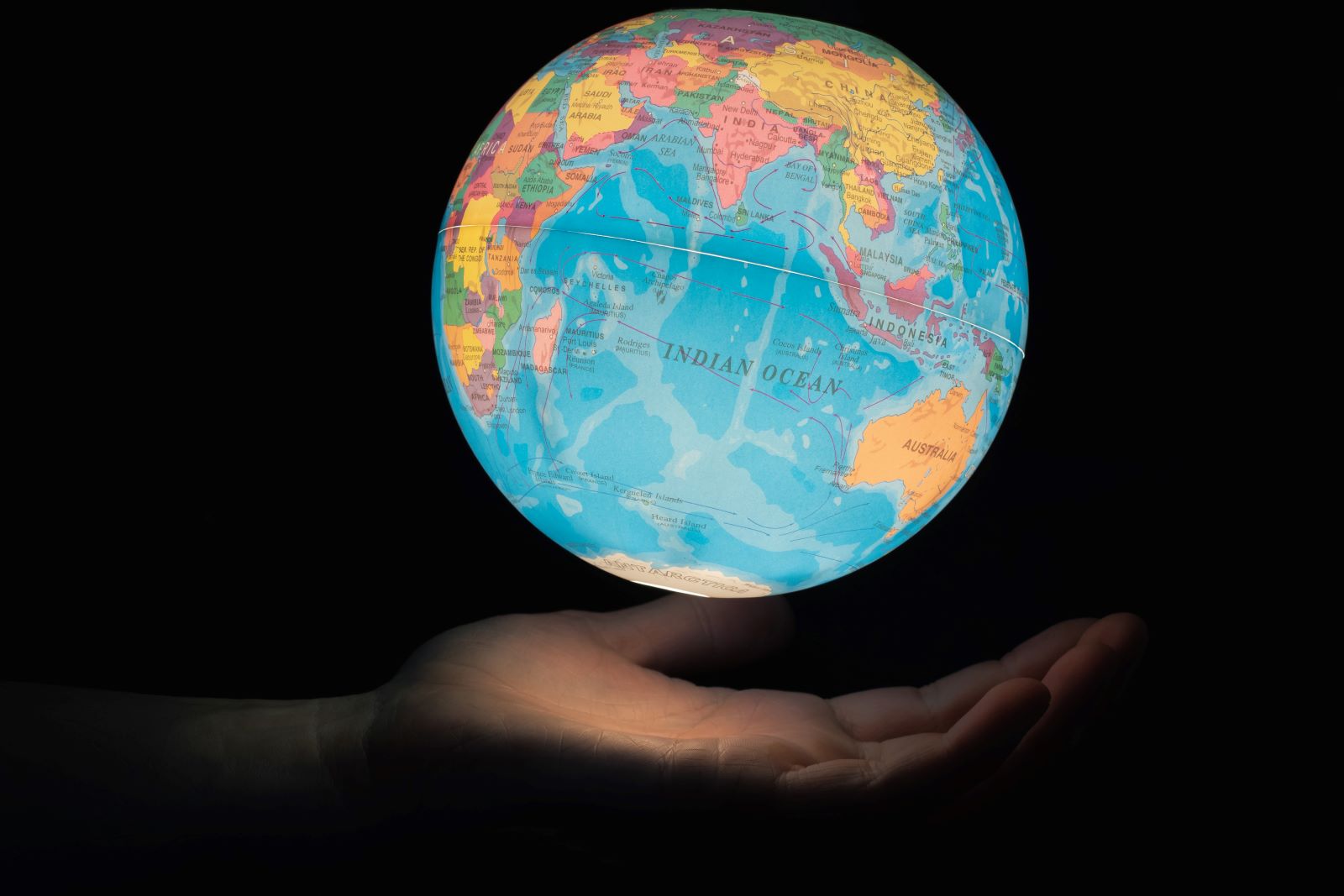
We hold up the world, metaphorically of course. Photo by Greg Rosenke on Unsplash
In other words, even without being an influencer, maybe you already have influence. Elizabeth Gilbert tells a story about how years ago she was on the midtown cross-town bus in New York. It was in January with sleeting wind and rain during evening rush hour traffic. The bus moved at a crawl and people were not in good moods. When the bus reached 10th Ave, the driver made an announcement.
He said, “Ladies and gentlemen, we are now nearing the Hudson River. I’m going to ask you to do me a favor. When you get off the bus, I’m going to hold out my hand. As you walk past me, I want you to drop your troubles into the palm of my hand. I’ll take your troubles for you, and when I drive past the river, I’ll throw them in. The reason I want to do this is because you all seem like you’ve had a bad day, and I don’t want you taking all your worries and sorrows home to your friends and families now. Because they deserve better than that, don’t they? So you just leave your troubles here with me to dispose of, and you all go have a wonderful night, OK?”
The entire bus erupted into laughter and sure enough, one by one the passengers exited the bus and dropped their troubles into the palm of the bus driver’s hand. They stepped off the bus with smiles on their faces.
We don’t know that bus driver’s name or anything about him, but we do know he made a difference that day. We know he directly influenced the people around him without sending a Tweet. It has me wondering, are you more important than you think you are? Are you someone who is holding up the world in your own way? You can’t know for sure so why not behave as if you are?
I dream of a world where we all understand the power we have to influence others and make a difference, even if we don’t have a million followers on Instagram. A world where we recognize sometimes the most ordinary-seeming person is capable of something extraordinary. A world where we behave as if each of us is holding up the world.
Another world is not only possible, it’s probable.
For the past week or so, tension has been building in my nervous system. I colored with crayons the other day and instead of easy doodling, I scribbled with so much force, one of my crayons broke. Later in the week, my chiropractor touched my spine and without any conversation or prompting said, “When you go home you need to break some plates.” Just by touching my spine, she could sense the tension thrumming through me. I didn’t break any plates (who’s going to clean those up?) but I did punch some pillows and indulge in silent screaming.
It didn’t help.
Instead, the tension remains like a brand on my body. I keep trying to dissipate it, to go back to feeling peaceful, but maybe I’m not supposed to feel that way. In his book The 12 Stages of Healing, Donald Epstein writes, “When we have become disconnected from, or have denied the reality of, our internal power – or if we have not expressed our innate potential – we often become angry … [however, as healing progresses] the initial irritation, upset, or anger is gradually replaced by a deep sense of self-respect and the desire to truly honor who we are.”
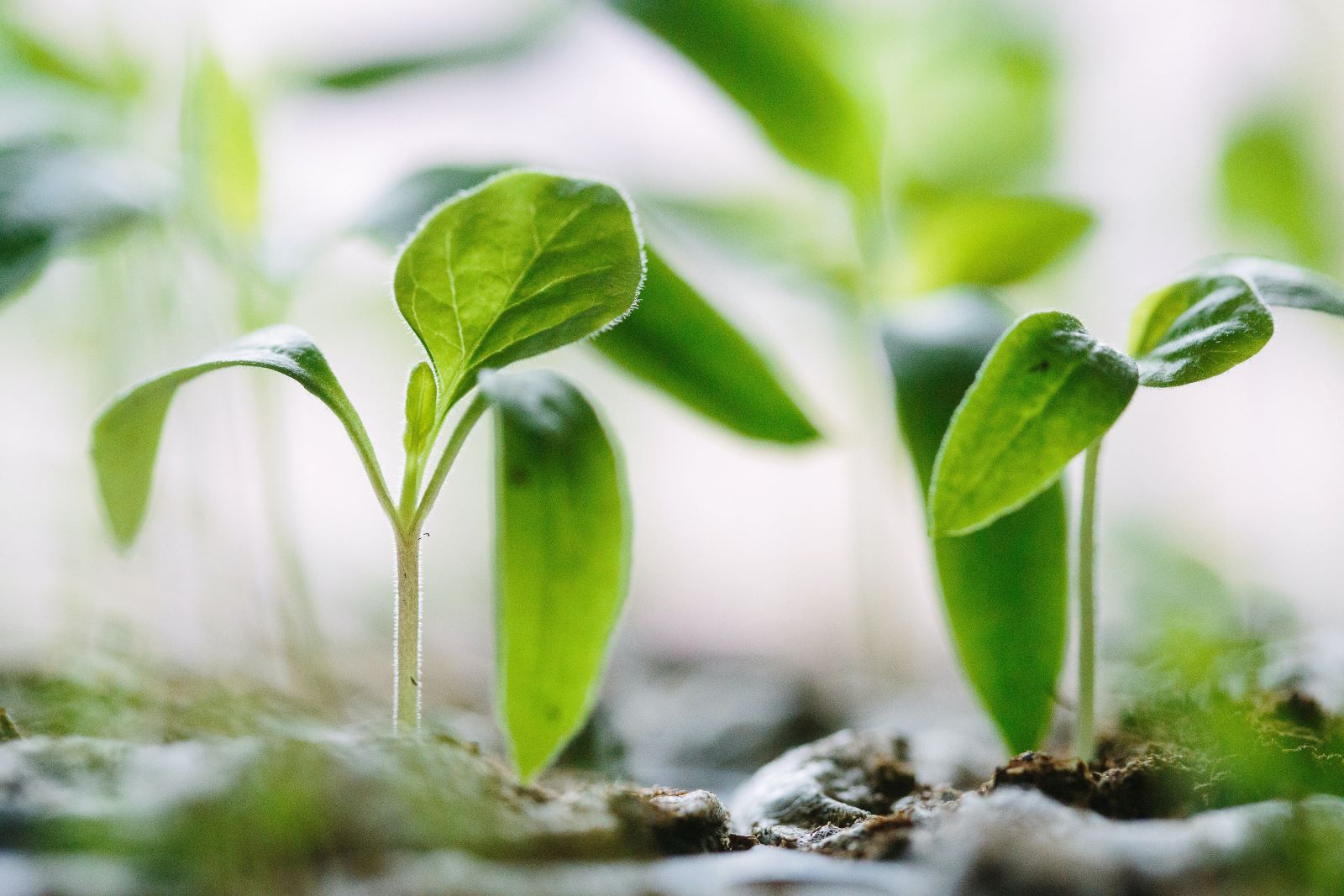
We are all seedlings. Photo by Francesco Gallarotti on Unsplash
I’m not past the anger, I’m still getting in touch with what all this tension is about, but I resonate with Epstein’s message about truly honoring who we are. As we enter into a new year according to the Jewish calendar, I feel the energy of change. I’m being transformed. Some might say I’m like a piece of coal being turned into a diamond, but that’s a myth. Diamonds are related to coal, but they’re the purer cousin so no, if you squeeze coal really, really hard, it will not become a diamond. When discussing this with a friend, she said a more apt metaphor is that of a seed.
To become a full-fledged plant, a seed exerts force in two directions. It pushes roots down into the ground but it also shoots up into the air. The force to push through a hard-shell casing is tremendous. It’s also miraculous, which I’m witnessing firsthand and in real time. I’m growing basil, cilantro, sage, and parsley from seeds. I planted these seeds, watered them daily, and then literally overnight, boom. Seedlings. While the process may have been gradual, for me as an observer of the process, it wasn’t that way at all.
I’ve written numerous times about feeling like a seed buried in dark, fertile soil, meaning life felt slow, quiet, perhaps even confusing. Right now, anyway, that’s no longer true. Instead, I identify with the seedling, bursting forth and experiencing something new. Because of the timing of all this tension, I wonder if it’s related to the novel writing class I’m taking. Meaning, I wonder if like the seeds, now that I’m giving myself the metaphorical nutrients to support the novel I’m working on, the magic and life force within me are busting out. I’m transforming. I want change to be easy, meaning less intense, but as I take my cues from nature, I realize transformation is the opposite.
This post is about me, but it’s also about everyone. Whether you celebrate the Jewish New Year or not, whether you’re experiencing a change of season temperature-wise or not, things are changing. It’s undeniable. And if you’re also feeling tense, I wonder if you can view it as a sign you, too, are transforming.
I dream of a world where we recognize change requires pressure and force. A world where we understand not all tension is bad. A world where we honor the cycles of our lives and support ourselves as we birth something new like the metaphorical seedlings we are.
Another world is not only possible, it’s probable.
I learned something interesting recently. If people think they’re supposed to help someone else, they will. If they don’t think it’s their responsibility, they won’t help. There’s a widespread misconception floating around about the bystander effect, which is when people are less likely to intervene during emergencies when others are present and witnessing the same situation. In 1968, John Darley and Bibb Latané conducted an experiment that simulated an emergency.
Study participants were told they would be discussing their experiences in college with other participants. Each person was told either one, two, or five other participants would be chatting with them, but in separate rooms. The other “participants” were prerecorded voices that were played at points throughout the experiment. During the discussion, the person would hear one of the other “participants” call for help while having a seizure. The study measured the time it took for each participant to respond to the emergency.
The researchers found participants who believed they were speaking with one other person intervened at a much higher rate than those who believed others, in addition to themselves, were a part of the discussion. Psychologists have interpreted that to mean people freeze when they’re in a group because they think someone else will help instead of them. However, in 2015, Kenneth Brown at the University of Iowa gave a Tedx talk about how the bystander effect is complicated.
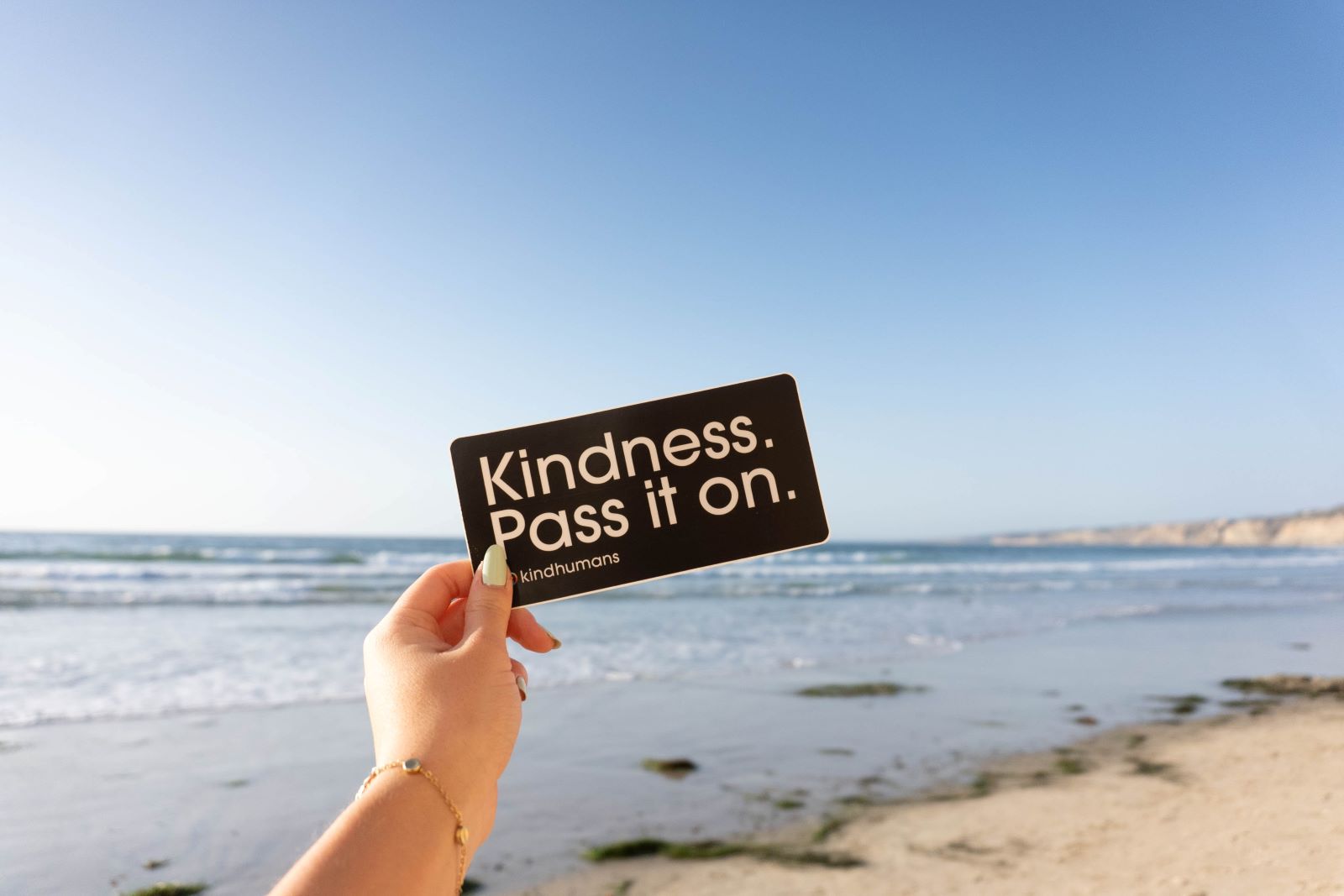
Kindness can spread. Photo by Mei-Ling Mirow on Unsplash
In his psychological studies, he found when subjects were told it was OK to help if something was wrong, that they wouldn’t ruin the study by doing so, the participants sprang into action when help was needed. There was no longer diffusion of responsibility and gone are the questions, “What does the researcher expect of me? What will happen if I step forward?” If it’s clear helping with something is what people are supposed to do, they do it.
This got me thinking about myself, naturally. I’m the type of person who will shout at a bus driver to wait for a fellow passenger. I don’t even think about it. It’s practically involuntary. On Saturday, I saw a man struggling with a small amp, a backpack, and a posterboard so I asked him if he needed any help (he did). Why do I do these things? Is it because I’m inherently a good person? No. I do these things because as a part of my spiritual practice, every morning upon awakening I say three oaths. One of them is I will help others according to my capacity.
By starting every morning with this thought in mind, I inherently believe it’s my responsibility to help out when and where I can. I haven’t conducted a study to determine whether other members of my spiritual community feel and act in the same way, but I can say for certain my family operates this way.
One time in Chicago my sister and I witnessed a man and woman fighting in the street perpendicular to us. Rosie stopped in her tracks and when I asked her why, she said, “I’m waiting to see if that woman needs help.” After my mother’s medical school graduation, we came upon a man lying in the street with a cut on his forehead who was semi-conscious. After we determined another bystander had already called 911, my mom ripped off her graduation gown and placed it over the top of him to keep the guy from going into shock. (She didn’t have any medical equipment on her so that’s all she could do.)
These are only a few of the incidents I know about. There are also the regular occurrences of help, like how my dad will do free tax work for certain clients, or my brother won’t charge for website design to help out a worthy person or cause. My brother and sister aren’t active members of my spiritual community, but they grew up in the same household I did where service was emphasized. It has me wondering what the world would be like if everyone saw it as their responsibility to help others according to their capacity.
Amelia Earhart says, “No kind action ever stops with itself. One kind action leads to another. Good example is followed. A single act of kindness throws out roots in all directions, and the roots spring up and make new trees. The greatest work that kindness does to others is that it makes them kind themselves.”
I dream of a world where people are kinder to each other. A world where we understand in order for that to happen, we each must take responsibility for helping others to the best of our capacity. A world where we understand kindness is contagious and we do our part to pass it on.
Another world is not only possible, it’s probable.
A little more than a year ago, I wrote a post called “Plants and People Need Pruning.” It was about letting go of relationships and recognizing it’s really hard for me. Part of the reason it’s hard is that all too often I don’t get a proper goodbye. The people that mattered to me – friends, partners, potential partners – just stopped talking to me. They were in my life one day and gone the next. Sometimes it wasn’t so dramatic. Sometimes they pulled a “slow fade” – gradually our communication became less and less until it disappeared altogether.
Some of my friends, especially the ones from college, I speak to on a less frequent basis because we live in different time zones, but I still consider them my friends. I understand relationships have ebbs and flows so this post isn’t about them, but rather the other relationships that are well and truly dead. Almost all of those relationships never received a proper goodbye.
When Gwyneth Paltrow and Chris Martin touted their conscious uncoupling, the public mocked them mercilessly. It sounded like a hokey thing made up by celebrities. So much ire and derision were spewed in their direction that Paltrow said, “The intensity of the response saw me bury my head in the sand deeper than I ever had in my very public life.” I suspect that’s because many people are uncomfortable with goodbyes and don’t know how to do them because it’s awkward or challenging. I understand. But push past that discomfort because a conscious uncoupling, or whatever you want to call it, can be a tremendous gift you give to yourself and someone else.
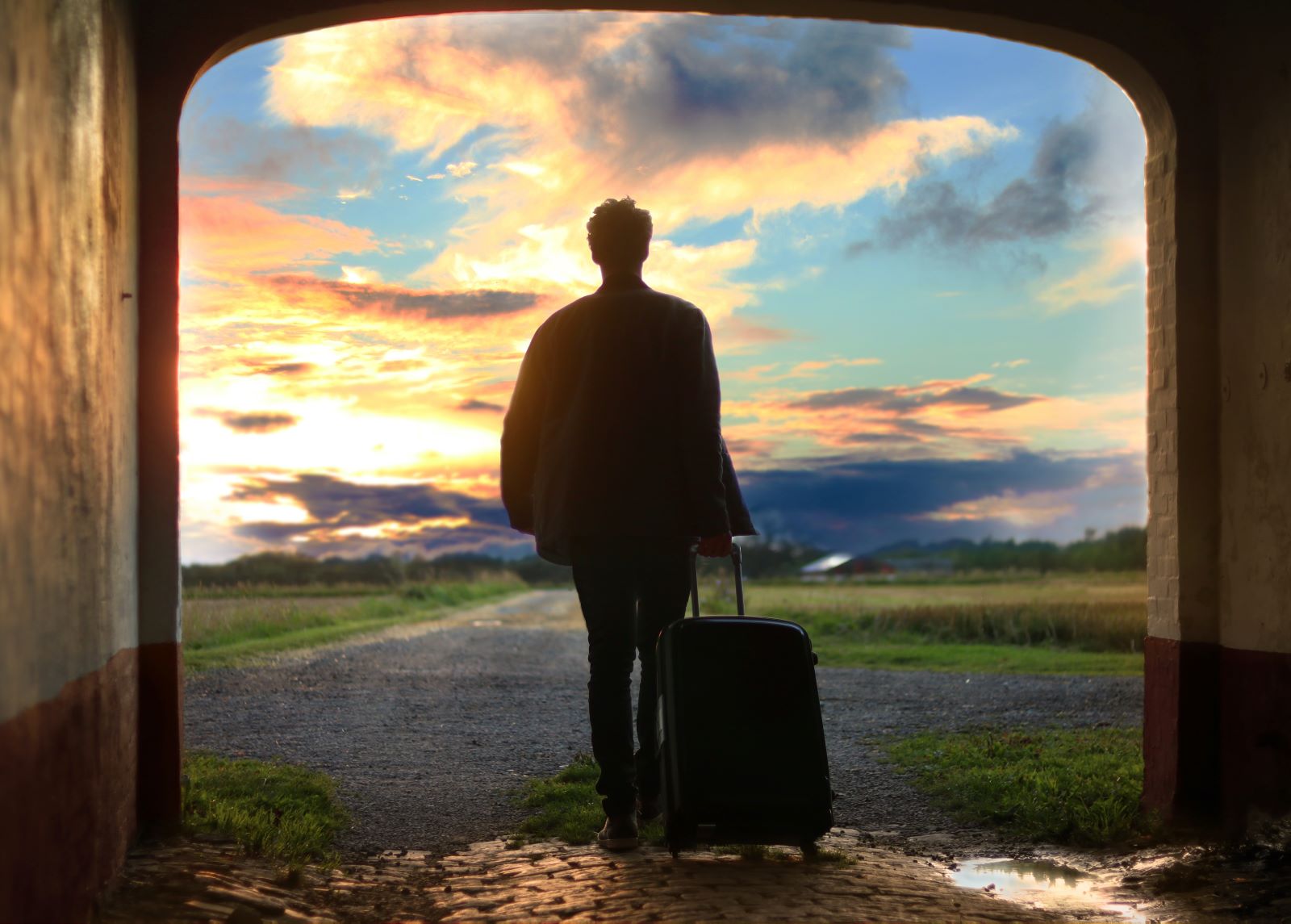
To say goodbye means to open to a new journey. Photo by Mantas Hesthaven on Unsplash
On Thursday, I said goodbye to my therapist/coach of eight years. This is a man I spoke with nearly every week. He knows everything about me and has seen me through soooo much. I’m not the same person I was as a result of our work together. However, I reached a point where I outgrew the need to see him every week. Instead of saying, “OK, bye, good luck with your life,” we had a termination session.
I told him all the things I appreciated about our time together, how I changed, what I will miss, and more. He did the same for me. I cried, a lot, but when we said goodbye, I didn’t feel an intense ache in my chest like I normally do. I didn’t feel hurt or wounded. I wasn’t left wondering if I matter to him or if he knows he matters to me. There were no question marks because we expressed it all. We honored our relationship and that’s exactly what I’ve been longing for all these years. It was healing to finally, FINALLY have a proper goodbye.
My spiritual teacher says, “A 5-year-old child is transformed in due course into a 15-year-old boy. In 10 years, the child becomes a boy. Thereafter, you will never be able to find the body of the 5-year-old child. So, the child’s body has certainly died.” He then goes on to mention the boy growing into a man, and then hitting middle age, then old age, until he finally dies and says, “The rest of the changes we do not call death; but in fact, all the changes qualify as death.”
If all changes qualify as death, why not hold little funerals for them? Why not grieve for them and give them proper homage and respect like we would for a no-longer-in-a-physical-body death? You might find that’s exactly what you need. I know I did.
I dream of a world where we say a proper goodbye to people. A world where we practice that not only for those on their deathbed but also for the living. A world where we lean into the possibly uncomfortable, awkward, or challenging situation of saying a conscious goodbye to someone because it’s beneficial for them and for us.
Another world is not only possible, it’s probable.
As you’ve likely heard, the first-ever Amazon labor union was formed on Friday. What I love about this story is the David versus Goliath aspect. I can think of no better representation of a modern-day Goliath than Amazon. After all, Amazon accounts for more than 40% of ecommerce, according to emarketer.com. The next highest percentage of internet commerce is Walmart, coming in at 7.1%. So. There’s that.
And, regarding workers specifically, Jeff Bezos said in a New York Times article he didn’t want hourly workers to stick around for long because he viewed a large, disgruntled workforce as a threat. That attitude shows because the company spent $4.3 million in 2021 alone on anti-union consultants, according to U.S. Department of Labor filings. And maybe you’re saying, “Amazon doesn’t need a labor union because employees have great working conditions!” That’s what Amazon is touting, but the reality doesn’t match because Amazon measures the time each employee spends off task at its warehouses, meaning every bathroom break is accounted for. If a person spends too long in the bathroom, they can be and have been, fired.
I could keep going, but I already wrote about the poor working conditions in a blogpost last year. Instead, let’s talk about our David, Christian Smalls. First off, how perfect is that last name to represent David?!? Also, he’s someone Amazon discounted because, in a leaked memo obtained by Vice in 2020, an Amazon layer told Jeff Bezos that Smalls was “not smart, or articulate.”
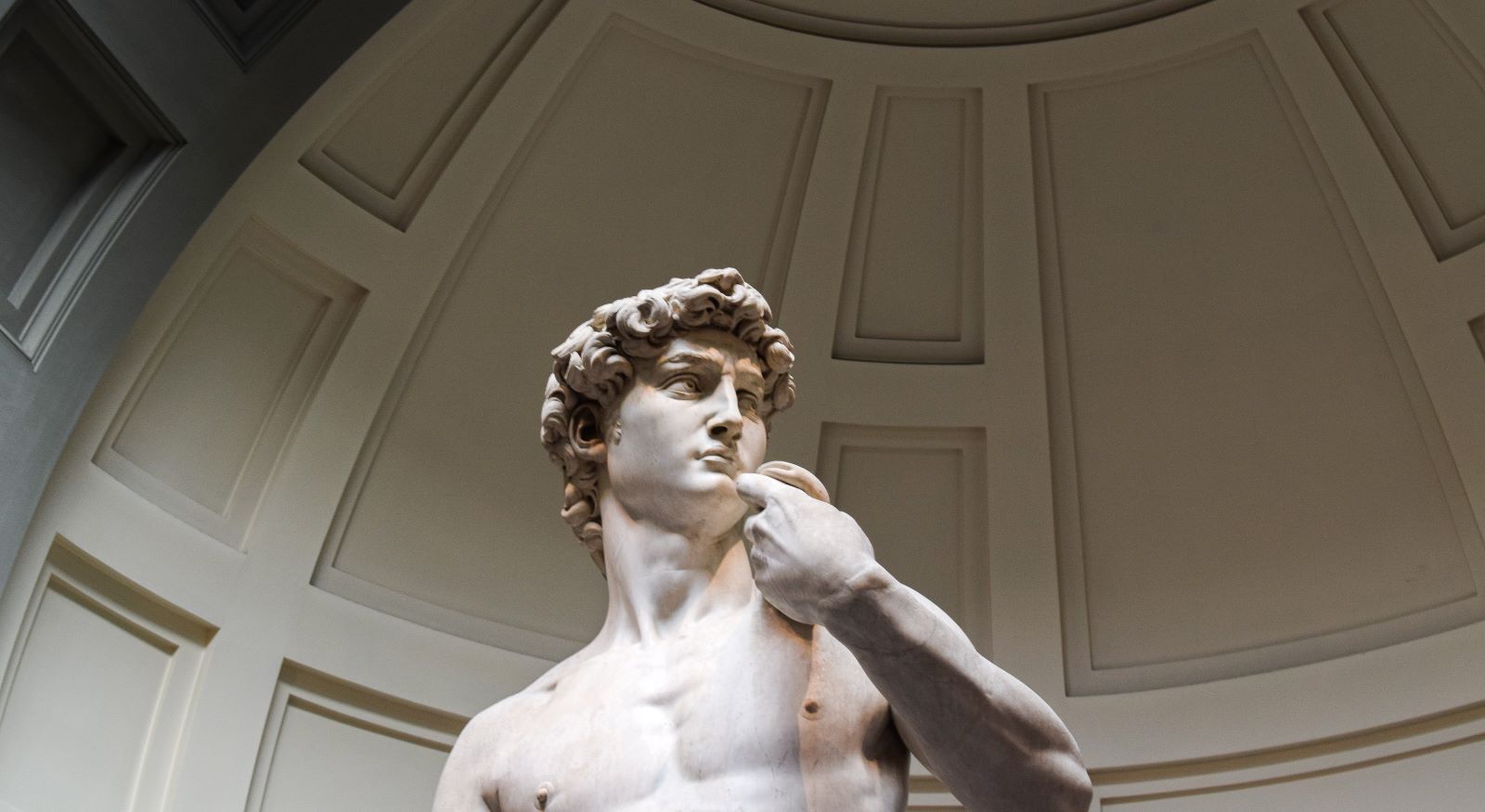
Keeping it classic here with the David sculpture. Photo by Mateus Campos Felipe on Unsplash
Take that, Amazon! The man you viewed as not smart or articulate spent the last two years talking to workers on Staten Island, holding cookouts, conversing with them at bus stops, and educating them on why a labor union is necessary. And it worked. Despite previous failed attempts, the Amazon factory known as JFK8 has a labor union. The vote wasn’t close either – the “yeses” outnumbered the “no’s,” by 500 votes. Yes, Amazon is fighting the outcome because of course they are, but still. In this day and age when we hear so many stories about corruption, plutocracy, and big corporations doing terrible things despite the opposition of the general public, it’s nice to hear a story about how the little guy can still win.
It reminds me of a quote from my spiritual teacher who spoke a lot about dharma, or the essential characteristics of human beings. There’s a lot to say on the subject, but in brief, my spiritual teacher praises the higher qualities of human beings; the ones that are aligned with truth, justice, generosity, and compassion. He said whenever human beings follow these higher qualities, their well-being, victory, and prosperity are ensured.
Furthermore, “whoever goes against these ingrained human characteristics … will be doomed to destruction. By divine decree, everyone has the right to live in the world with dignity. If anyone creates any obstacle against this dharma-oriented system, if they oppose it, they are bound to be destroyed. No one has ever been victorious or will ever be victorious by opposing dharma. Always remember that when dharma is with you, whoever will oppose you will be razed to the ground – their destruction is a must.”
A caveat here is sometimes that destruction is slow. It can take decades to appear and/or may happen in another life. However, I take heart knowing that in the long run, the righteous, the justice-oriented, the person who is fighting for a better world, like Christian Smalls, in this case, will win.
I dream of a world where we remember real-life David versus Goliath stories exist. A world where we understand sometimes the little guy does trounce the evil, big conglomerate. A world where we realize if we continue to do good in the world, to follow our higher nature, eventually we will succeed.
Another world is not only possible, it’s probable.